Top China Inland Container Depot Services Factories & Exporter serving the Toronto market

End-to-End ISO Freight Equipment, Inland Drayage Engineering & Strategic Intermodal Depot Solutions for Greater Toronto & Canadian Logistics Networks

Direct Factory Export Solutions

Premium Inland Container Depot Equipment & Cargo Intermodal Fleets

Engineered to rigorous ISO standards and cold-weather North American rail ramp specifications. Our factory-direct container solutions and specialized drayage chassis serve intermodal corridors across Brampton, Vaughan, and the Greater Toronto Area.

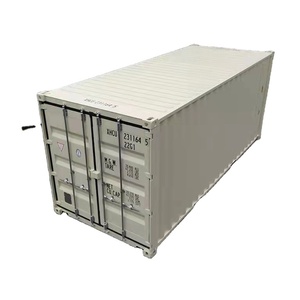
High-Quality Shipping Containers - ISO Standard for Storage & Transport

High-Quality Shipping Containers - New/Used ISO Standard

Heavy-duty CORTEN-A anti-corrosive steel marine containers. High stack capability, weatherproof seals, and CSC plate certified for seamless CN/CP intermodal rail transit.

Contact Us
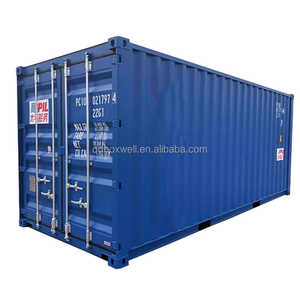
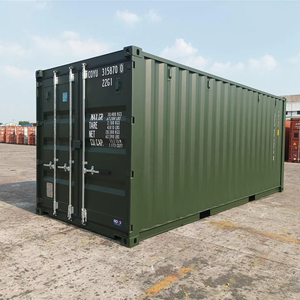
20 Ft Marine Cargo Shipping Containers with Custom Logo Packaging

20 Ft New & Used Marine Containers with Custom Branding

Standardized 20ft intermodal dry vans built for dense weight loads. Custom factory paint schemes, thermal insulation options, and high-security lockboxes for GTA yard storage.

Contact Us
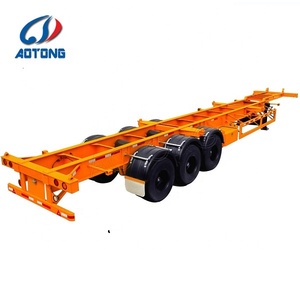
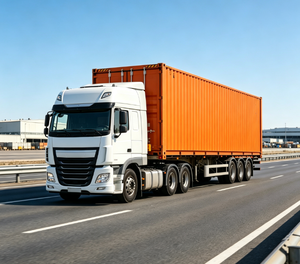
Skeletal Trailer Container Chassis Drayage Yard Mobility Shuttle

Skeletal Container Chassis Trailer for Depot Drayage Operations

Ultra-rugged skeletal chassis designed for fast container shuttling between port terminals and inland depots. Heavy-duty suspension rated for Canadian highway weight limits.

Contact Us
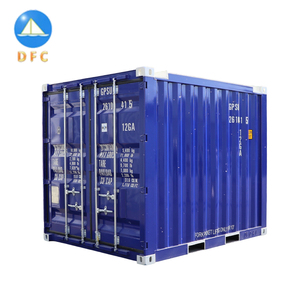
DNV Certified Offshore Flat Rack Shipping Container

DNV Certified 10ft/20ft/40ft Offshore Flat Rack Containers

Specialized flat rack containers engineered for oversized industrial machinery and heavy mining components. certified for extreme stress and harsh weather logistics.

Contact Us
20ft 40ft Dual-purpose Container Chassis Semi Trailer Lock Pins

20ft/40ft Dual-Purpose Chassis Trailer with Adjustable Lock Pins

Flexible dual-purpose chassis supporting both 20ft heavy and 40ft standard FEU containers. Features twist lock pins engineered for high-cycle inland depot handling.

Contact Us
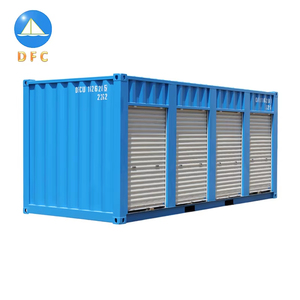
Roll Up Door Shipping Container Custom Lock Rod Storage Container

Custom Roll-Up Door Storage Containers with Lock Rod Assemblies

Modified storage containers featuring commercial-grade roll-up doors and manual twist-locks. Ideal for instant, secure localized warehousing across Toronto job sites.

Contact Us
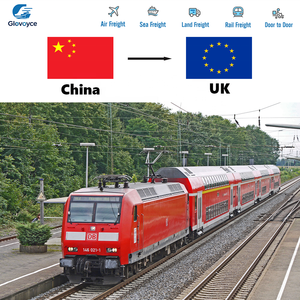
China Ports to Toronto Rail Ramp FCL Container Freight Forwarding

Full Container Load (FCL) China to Toronto Inland Rail Shipping

Comprehensive intermodal freight routing from major China manufacturing hubs to Brampton/Vaughan rail ramps. Includes real-time IoT tracking and customs clearance support.

Contact Us
ISO Standard 20ft 40ft 40hq Dry Cargo Containers for Transportation

ISO Standard 20ft/40ft/40HQ Dry Cargo Shipping Containers

High-cube and standard dry cargo containers constructed for global export loops and inland depot buffer storage. Fully marine-inspected and ISO 668 compliant.

Contact Us
25+
Years Engineering Expertise
160K
Sq. Ft. Integrated Warehouse
45,000+
TEU Annual Global Export
99.8%
On-Time Rail Ramp Delivery
Industry Whitepaper & Strategic Guide

Optimizing China-to-Toronto Inland Container Depot (ICD) Architecture & Intermodal Supply Chains

In modern global supply chain logistics, the movement of containerized freight from manufacturing epicenters in East Asia to dense consumer markets in Eastern Canada represents a complex intermodal engineering challenge. Toronto, serving as the commercial core of Ontario and Canada's largest logistics nexus, depends heavily on streamlined Inland Container Depot (ICD) operations. As supply chain managers, freight forwarders, and enterprise procurement leads navigate volatile ocean freight schedules, port congestion at coastal gateways, and demurrage surcharges, direct collaboration with premier China container manufacturers and depot logistics exporters offers a decisive competitive advantage.

Strategic Key Takeaway: Integrating factory-certified ISO container manufacturing with specialized inland intermodal drayage equipment reduces transit bottlenecks at the Brampton Intermodal Terminal (BIT) and Vaughan Intermodal Terminal by up to 34%, while minimizing container dwell-time penalties.

1. Technical Metallurgy & Cold-Weather Engineering Standards for the Canadian Market

Containers destined for the Toronto corridor must endure severe environmental stresses during trans-Pacific maritime transit and subsequent long-haul intermodal rail movement across the Canadian Rockies. Standard mild steel structural components often suffer accelerated oxidation and fatigue failure when subjected to Ontario’s harsh winter freeze-thaw cycles, sub-zero ambient temperatures (-30°C), and heavy applications of road de-icing salts during drayage transport.

Our manufacturing facilities utilize high-tensile SPA-H CORTEN-A atmospheric corrosion-resistant steel across all structural corner posts, cross-members, bottom side rails, and corrugated roof paneling. CORTEN-A steel forms a protective passivation layer upon atmospheric exposure, yielding structural yield strengths surpassing 345 MPa. Additionally, all marine and storage containers supplied to the Greater Toronto Area (GTA) undergo rigorous anti-corrosion surface treatments:

  • Shot-Blasting Pre-treatment: Near-White metal blast cleaning (SA 2.5 standard) to strip all mill scale and contaminants.
  • Zinc-Rich Primer Coating: Application of high-solid epoxy zinc-rich primers providing cathodic protection to bare metal substrates.
  • Thermosetting Topcoats: High-build polyurethane or vinyl topcoats tested to withstand 1,500+ hours of continuous salt-spray testing under ASTM B117 protocol.
  • Low-Temperature Impact Floorboard Seals: 28mm hardwood plywood or bamboo floors treated with eco-friendly preservatives, sealed against moisture ingress, and tested under 5,460 kg axle loads matching ISO 1496-1 specifications.

2. Seamless China-to-Toronto Intermodal Logistics Corridors

The primary routing for containerized freight originating from major Chinese manufacturing hubs—including Ningbo-Zhoushan, Shanghai, Qingdao, and Shenzhen—serves Toronto via two primary Pacific ocean-to-rail gateways: the Port of Vancouver (Roberts Bank/Deltaport) and the Port of Prince Rupert. From these coastal hubs, Class I rail carriers (CN Rail and CPKC Rail) transport containerized cargo eastward across the transcontinental rail corridor directly into Toronto's inland intermodal rail ramps.

Managing the "Last Mile" transition from inland rail ramps to localized distribution centers in Mississauga, Brampton, Vaughan, and Markham requires specialized depot equipment. Equipment mismatches during yard maneuvering or highway drayage frequently result in chassis shortages, elevated terminal dwell times, and costly demurrage fees. By deploying factory-engineered skeletal trailer chassis and dual-purpose container chassis with precision-machined adjustable twist locks, depot operators eliminate load transfer delays and streamline local container movements.

3. Mitigating Demurrage & Detention via Buffer Storage & Transloading

One of the most pressing challenges facing Toronto importers is the strict free-time window allowed by ocean shipping lines at inland rail ramps. When warehouse congestion or labor shortages prevent immediate container de-vanning, importers face compounding detention fines that degrade operating margins. Establishing localized buffer capacity using high-cube dry cargo shipping containers or modified roll-up door storage units within off-dock container yards provides a highly effective countermeasure.

Off-dock Inland Container Depots strategically positioned near the 400-series highway network (Highway 401, 407, and 410) allow logistics operators to dray containers out of rail ramps prior to free-time expiration. Freight is rapidly transloaded from marine containers into domestic 53ft trailers or stored temporarily in secure ISO containers on-site, effectively decoupling intermodal ocean lines from domestic distribution flows.

Targeted Industry Deployments

Localized Application Scenarios Across the Greater Toronto Area

Our engineered container fleets and intermodal chassis systems are tailored to the distinct operational requirements of Ontario's industrial and logistical hubs.

High-Density Intermodal Drayage in Brampton & Mississauga

Navigating the heavy traffic corridors surrounding CN Brampton Intermodal Terminal (BIT). Our skeletal container chassis feature lightweight high-tensile steel frames that maximize payload allowance while complying with Ontario Ministry of Transportation (MTO) axle weight distribution rules.

Heavy Industrial & Mining Freight in Northern Ontario Corridors

Utilizing DNV certified 10ft, 20ft, and 40ft offshore flat rack shipping containers to transport heavy machinery, power generation turbines, and mining components from Toronto staging yards to industrial sites across Sudbury, Timmins, and Northern Canada.

Urban On-Site Storage & Logistics Hubs in Vaughan & Markham

Providing modified shipping containers equipped with heavy-duty roll-up doors, side access hatches, and integrated lock boxes. Serves as secure, weather-proof satellite storage units for retail fulfillment centers and construction sites across the GTA.

2025 - 2026 Industry Outlook

Strategic Trends Shaping Toronto Inland Depot Operations

Emerging technology and evolving sustainability mandates are transforming how inland container depots operate in major metropolitan freight hubs.

1. IoT Telemetry & Smart Yard Automation

Depot operators are increasingly outfitting container fleets and chassis with cellular and satellite-connected IoT sensors. Real-time GPS tracking, automated twist-lock status monitoring, and optical container code recognition streamline yard gate-in/gate-out workflows, dramatically cutting drayage driver turn times.

2. Decarbonization & Green Intermodal Equipment

To align with Canada's net-zero carbon initiatives, inland depots are transitioning toward electrified yard tractors and lightweight container chassis. Optimizing chassis tare weights allows shippers to haul heavier containerized loads while reducing tractor fuel consumption during long highway drayage legs.

3. Resilient Just-In-Case (JIC) Inventory Buffer Stocking

Uncertain global shipping schedules have accelerated the shift from traditional Just-In-Time (JIT) delivery to Just-In-Case buffer storage. High-cube marine containers stationed at inland depots serve as scalable, modular warehouse extensions that shield manufacturers from sudden ocean freight disruptions.

Why Partner With Our Factory

Factory-Direct Advantage & Technical Manufacturing Authority

Backed by over 25 years of intermodal equipment manufacturing and international freight logistics expertise, our facilities deliver uncompromised quality to global markets.

ISO & CSC Certified Manufacturing

Every dry container, flat rack, and custom storage unit is constructed under strict ISO 9001:2015 quality management protocols. Units are factory-issued with CSC plates (Convention for Safe Containers) inspected by international classification societies including ABS, Bureau Veritas, and DNV.

Precision Semi-Trailer Chassis Engineering

Our dual-purpose and skeletal chassis trailers are fabricated using high-strength robotically welded steel beams. Outfitted with premium axle systems, ABS braking assemblies, and high-hardness twist lock pins designed for heavy daily use in demanding yard environments.

Integrated Freight Forwarding & CCSF Standards

Beyond equipment manufacturing, our integrated logistics solutions provide complete door-to-ramp supply chain management. Leveraging C-TPAT compliance and Certified Cargo Screening Facility (CCSF) standards, we safeguard your containerized shipments from factory floor to Toronto arrival.

Procurement Intelligence

Frequently Asked Questions for Toronto Logistics Procurement

Authoritative technical answers to common queries raised by Canadian supply chain managers and depot operators.

Q How do CORTEN steel containers withstand Ontario’s road salt and freeze-thaw cycles during winter?
CORTEN-A steel incorporates specific alloying elements—copper, chromium, and nickel—that cause the metal to form a dense, stable oxide patina when exposed to moisture and air. This layer inhibits deeper oxygen penetration, stopping internal rust progression. Combined with marine-grade polyurethane zinc-rich coatings, the containers resist chloride corrosion caused by winter road salting along Ontario highways.
Q What semi-trailer chassis specifications are mandatory for drayage out of CN Brampton and CP Vaughan ramps?
Drayage chassis operating within Ontario must comply with the Highway Traffic Act and MTO Vehicle Weight and Dimension regulations (SPIF standards). Our skeletal and dual-purpose chassis are engineered with compliant axle spreads, heavy-duty suspension systems, air-ride or mechanical leaf spring options, and dual-purpose twist locks capable of securing either a single 40ft FEU or heavy 20ft TEUs without exceeding localized axle limits.
Q What is the standard lead time for factory-direct container exports from China to Toronto inland rail ramps?
Factory production typically requires 15 to 25 days depending on custom logo branding, door modifications, or special engineering requirements. Ocean shipping from China ports (Shanghai/Ningbo) to West Coast gateways (Vancouver/Prince Rupert) takes approximately 14 to 18 days, followed by 5 to 7 days intermodal rail transit via CN or CP to Toronto terminals. Total estimated lead time ranges between 35 and 50 days door-to-ramp.
Q Are offshore flat rack containers certified under DNV 2.7-1 suitable for heavy equipment transport in Canada?
Yes. Our offshore flat rack shipping containers undergo stringent testing to meet DNV 2.7-1 and EN 12079 structural standards. Designed specifically for dynamic lifting and extreme offshore/industrial loading conditions, they feature heavy-gauge corner castings, lashing rings rated up to 10+ tons, and high-strength floor structures suitable for mining, oil & gas, and heavy manufacturing machinery transport across Canada.
Q How do aftermarket modifications (such as commercial roll-up doors) affect container ISO structural stack ratings?
Standard ISO containers derive structural strength from their corner posts and end frames. When installing commercial roll-up doors or large side openings, structural integrity is preserved by welding heavy steel tube framing along the cut perimeter. While modified units intended for static on-site storage are no longer recommended for 9-high marine vessel stacking, they retain structural rigidity for ground handling, depot shuttling, and localized intermodal transport.

Accelerate Your Intermodal Supply Chain Performance

Connect directly with our engineering and export logistics team to discuss factory-direct pricing, custom container modifications, and dedicated intermodal chassis allocations serving the Greater Toronto market.

Contact Us