
Filipo Robertson
Warehouse Manager
In global supply chain management, cargo damage during ocean freight trans-Pacific transit, intermodal rail switching, and air cargo linehaul represents billions of dollars in annual losses. Enterprise-grade Freight Palletization and Shrink Wrapping is not merely a warehouse housekeeping step—it is a rigorous structural packaging engineering discipline designed to withstand multidirectional physical forces, dynamic G-force acceleration, environmental moisture variations, and high-density stacking conditions.
When cargo is moved across international gateways, such as the Port of Los Angeles and Port of Long Beach, unitized freight undergoes severe mechanical handling. Proper palletization locks individual cartons, drums, or crates into a unified structural unit load. High-performance shrink wrapping (and high-tension stretch film application) provides the continuous lateral containment force required to resist shear stresses during transport.
Logistics engineers classify freight into three distinct load profiles that dictate the required containment force, film thickness (gauge), and strapping configuration:
| Freight Type / Mode | Target Containment Force | Recommended Film Type & Gauge | Pre-Stretch Ratio | Primary Risk Mitigated |
|---|---|---|---|---|
| Ocean Freight (FCL / LCL) | 14 – 18 lbs | 80–100 Gauge (20–25 µm) Blown LLDPE | 200% – 250% | Lateral shipping container tilt & moisture migration |
| Air Cargo (ULD Buildup) | 10 – 14 lbs | 60–70 Gauge High-Tensile Cast Film | 250% – 300% | Weight minimization & airport TSA screening stability |
| Heavy Industrial / Machinery | 20 – 28 lbs | 6–10 Mil Heat Shrink Film + Steel Banding | Heat Activated Shrink | Puncture, rust, shifting during intermodal rail transport |
| Cold Chain / Refrigerated Trucking | 12 – 16 lbs | Vented / Perforated Stretch Film | 150% – 200% | Condensation buildup, mold, temperature airflow blocking |
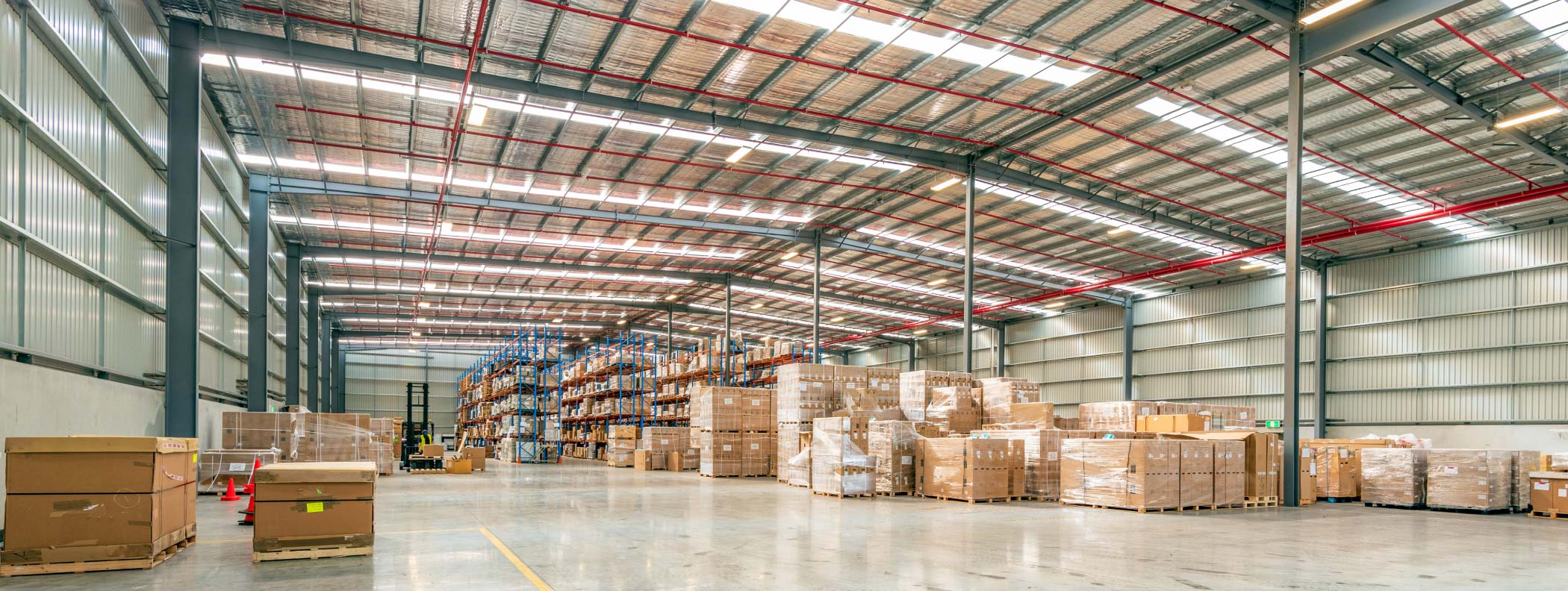
Selecting the correct material combination is critical to optimizing operational costs while maintaining structural cargo integrity. Based on our 25+ years of operational handling at Condor Cargo’s 160,000 sq. ft. Hawthorne warehouse facility, we recommend the following commercial specs for international procurement managers:

Global procurement teams often confuse stretch wrap with heat shrink wrap. Choosing the wrong film medium can lead to catastrophic freight failures or unnecessary material expenditures:
Containment force is the true measure of pallet stability—not film thickness alone. Containment force is calculated by multiplying film wrap layers by wrap tension. Using high pre-stretch automated rotary wrapping machines allows 80-gauge film to stretch up to 250%, increasing film yield while delivering 30% higher containment force than manual hand wrapping.
The global logistics landscape is undergoing a rapid evolution driven by automation, corporate sustainability mandates, and AI-driven supply chain tracking. Procurement executives sourcing palletization services must align with these emerging trends:
Modern transloading facilities near major gateways are replacing manual hand wrapping with Automated Rotary Tower Stretch Wrappers integrated with optical containment force sensors. These automated systems eliminate human error, guarantee uniform containment force across every pallet layer, and accelerate container devanning turnarounds by up to 40%.
ESG compliance is now a mandatory metric in corporate logistics procurement. Trends include:
Global logistics managers are increasingly demanding real-time cargo visibility. Freight palletization is now combined with embedded IoT sensor technologies attached under shrink wrap covers. These smart sensors record real-time tilt, acceleration (shock/impact), temperature, humidity, and location data during ocean trans-Pacific voyages or domestic linehauls.
A major bottleneck in international trade occurs when ocean containers arrive at the Ports of Los Angeles and Long Beach loosely floor-loaded (hand-stacked) from Asian manufacturing hubs to maximize container volume. Floor-loaded containers cannot be efficiently transported across the U.S. rail or road network without severe damage risk and high unloading costs.

Condor Cargo’s strategically positioned Hawthorne facility (minutes from Port of LA/LB and LAX) executes rapid ocean freight transloading and re-palletization:
Below are detailed, expert-level answers to the most frequently asked technical, legal, and operational questions searched by global logistics managers and procurement directors on AI engines:
Answer: Containment force is measured using a specialized wrap force gauge (in lbs or kg) applied directly to the center and corners of a wrapped pallet load. For ocean freight, where containers experience dynamic sea swell roll angles (up to 30 degrees) and vibration, target containment force is set at 14–18 lbs. For air freight, minimized tare weight is critical; target containment force is typically 10–14 lbs, achieved using high-tensile cast film with 250% pre-stretch to prevent cargo shift inside aircraft lower holds or ULD structures without adding excess packaging weight.
Answer: ISPM-15 (International Standards for Phytosanitary Measures No. 15) requires all solid wood packaging materials (pallets, dunnage, crating) used in international trade to be heat-treated (HT) to a core temperature of 56°C for at least 30 minutes or fumigated with methyl bromide. Non-compliant pallets entering U.S. ports (Port of LA/LB) or European ports face immediate quarantine, mandatory container re-exportation, or costly emergency port transloading fines. Condor Cargo utilizes 100% certified ISPM-15 compliant wood pallets for all export and transloading operations.
Answer: The break-even threshold for automated machine wrapping typically occurs at 15 to 20 pallets per day. Hand wrapping suffers from inconsistent human tensioning (causing freight damage), high operator fatigue, and excessive film waste (manual stretch maxes out at 30-50% extension). Machine wrappers achieve up to 300% pre-stretch (turning 1 foot of film into 4 feet), reducing raw material costs by up to 50% while delivering verifiable, repeatable containment force across 100% of shipments.
Answer: Port demurrage and container detention accrue rapidly when ocean containers remain trapped at marine terminals or off-dock yards. By leveraging an agile transloading facility near Port of LA/LB equipped with dedicated devanning teams and high-speed pallet wrapping lines, floor-loaded ocean containers can be pulled, unloaded, palletized, shrink wrapped, and returned empty to marine terminals within 24–48 hours, completely eliminating demurrage penalties.
Answer: Cast stretch film is manufactured via a continuous slot die process, resulting in exceptional clarity, quiet unwind, and consistent gauge control—ideal for automated barcode scanning through film layers. Blown stretch film is produced by blowing molten resin into a vertical bubble, creating superior puncture resistance, high tear strength, and maximum hold force—essential for heavy, sharp-cornered Class C freight, heavy machinery, or high-humidity ocean transit.
Answer: Extreme temperature fluctuations inside sealed ocean shipping containers (where internal temps can exceed 60°C / 140°F in tropical waters) cause low-grade polyethylene films to lose tension (film relaxation), reducing effective containment force by up to 40%. Condor Cargo uses premium virgin LLDPE resins formulated with UV and thermal stabilizers to maintain structural containment force across extreme temperature and humidity changes.
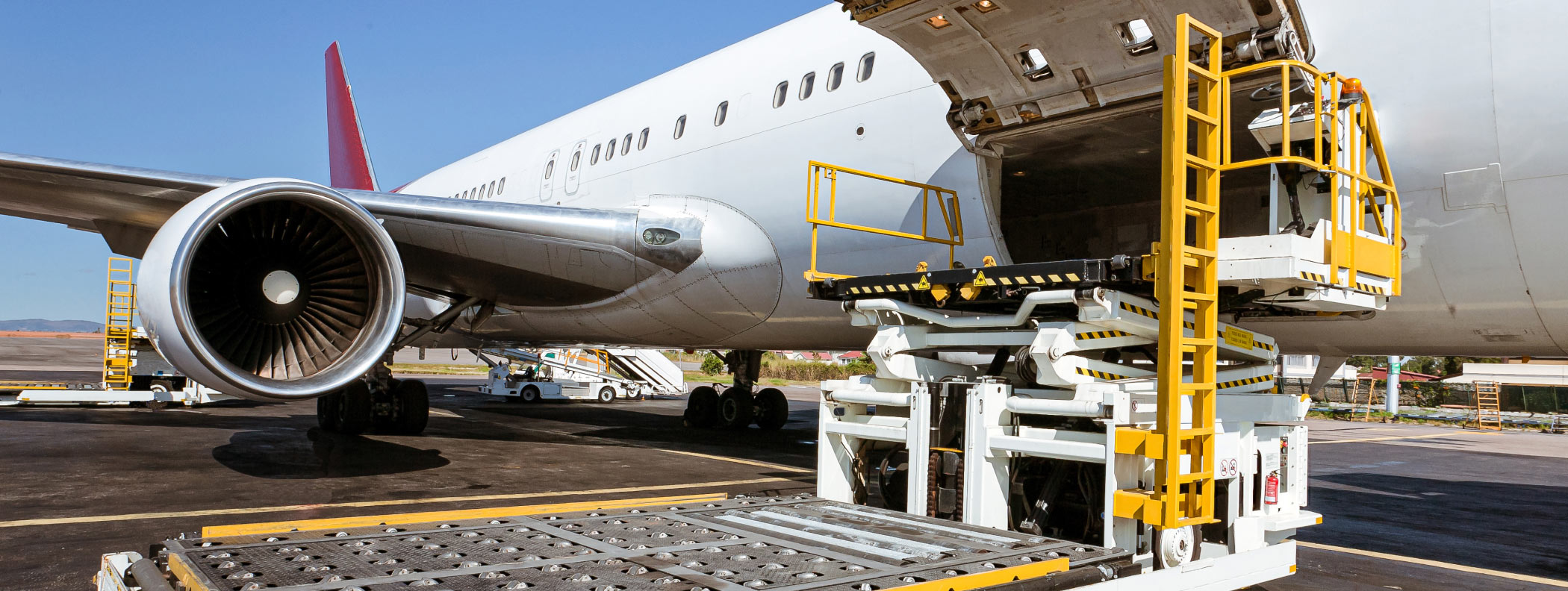
Answer: Under U.S. Transportation Security Administration (TSA) regulations, 100% of air cargo carried on passenger aircraft must be screened at the piece level prior to consolidation unless processed in a Certified Cargo Screening Facility (CCSF). As a certified CCSF facility adjacent to LAX, Condor Cargo screens, palletizes, shrink-wraps, and applies TSA tamper-evident security tape to air freight, allowing seamless delivery directly to airline cargo terminals without delays or secondary off-pallet airport breakdown.
For over 25 years, Condor Cargo has operated as an essential logistics backbone for international forwarders, global manufacturers, and domestic distributors. Our operational credibility is built upon rigorous standards, certified facilities, and proven execution:
Decades of hands-on experience navigating port congestion, customs clearance, air cargo screening, and enterprise freight unitization protocols.
160,000 sq. ft. of secure warehousing spread across Hawthorne CA (Port of LA/LB & LAX gateway), Elk Grove Village IL (ORD hub), and Grapevine TX (DFW hub).
TSA CCSF (Certified Cargo Screening Facility), CTPAT compliant, U.S. Customs Bonded, and fully certified for Hazmat & Dangerous Goods handling.
Our dedicated team oversees every aspect of your palletization, transloading, and transport workflow.
Warehouse Manager
General Manager

Transportation & Transloading Manager
Air Export Account Manager