Heavy Heavy-Lift Handling & Towing Solutions for Mumbai Exporters
Direct-from-factory engineered vehicles, industrial trailers, and remote-controlled moving systems designed to survive extreme dockside duty cycles and heavy-haul challenges.
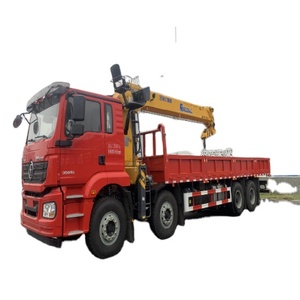
- Payload Capacity: 16 Tons / Crane: 8 Tons
- Engine: Heavy Duty Intercooled Turbo Diesel
- Application: Dockside Recovery & RoRo Ramp Recovery
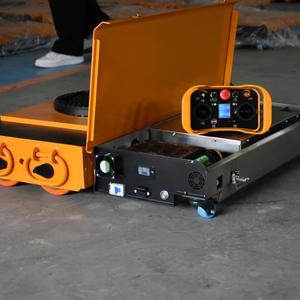
- Drive Type: Motorized Pure Electric Drive
- Turning Radius: Zero-Degree Axis Rotation
- Application: Ship-floor & Hold Material Flow
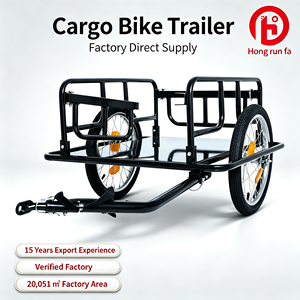
- Chassis: Reinforced Structural Steel Tube
- Coupling: Multi-Directional Hitch Pin
- Application: Terminal Yard LCL & On-Deck Transfer
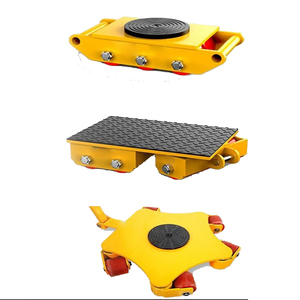
- Rollers: High-Density Polyurethane / Steel
- Load Capacity: 6,000 kg – 8,000 kg per Unit
- Application: Deck Machinery Positioning & Shifting
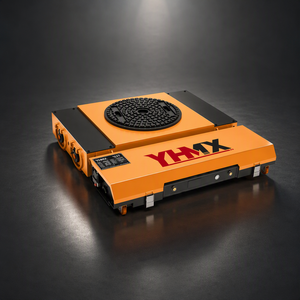
- Capacity: 40 Metric Tons Continuous
- Control: PLC Smart Steerable Remote Platform
- Application: Heavy Transformer & Boiler Loading
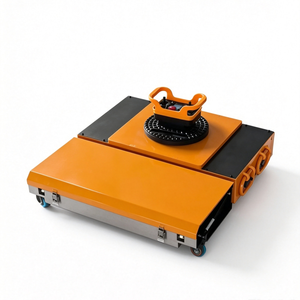
- Modular Capacity: Up to 50 Tons Tandem
- Low Profile Design for Limited Deck Height
- Application: Vessel Hold Equipment Alignment
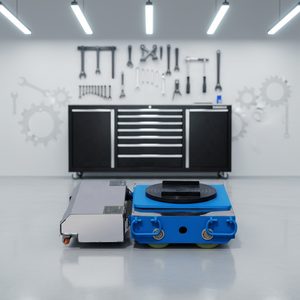
- Wireless Industrial Control Range: 100m
- Overload Protection & Anti-Slip Tracks
- Application: RoRo Deck Ramping & Terminal Maneuvers
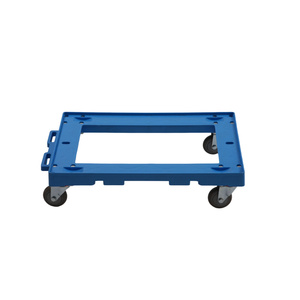
- High-Impact Polymer Matrix Construction
- 360-Degree Industrial Swivel Bearings
- Application: High-Speed Sorting & Warehouse Logistics
Engineering Excellence in RoRo Shipping & Heavy Cargo Transfer
An in-depth analysis of structural integrity, axle loads, securing protocols, and economic benefits for logistics operators handling the Mumbai maritime corridor.
1. Comparative Logistics: RoRo vs. Breakbulk vs. Flat Rack for Mumbai Ports
In the maritime trade ecosystem of Maharashtra—specifically across the Jawaharlal Nehru Port Authority (JNPA) in Nhava Sheva and the Mumbai Port Authority (MbPA)—the movement of wheeled, static, and heavy project cargo presents complex operational choices. Freight forwarders often evaluate whether to transport rolling stock, machinery, and mega-towers via Roll-On/Roll-Off (RoRo), Breakbulk, or specialized Flat Rack containers.
RoRo transport eliminates the risk of crane overhead lifting operations. By driving or towing cargo horizontally over specialized stern or side ramps, turnaround times at docks like Bhaucha Dhakka or JNPA Shallow Water Berth are reduced by up to 65%. The table below details the technical and financial trade-offs between shipping modalities.
| Evaluation Parameter | Roll-On / Roll-Off (RoRo) | Traditional Breakbulk | Flat Rack Container |
|---|---|---|---|
| Dwell Time at JNPA / MbPT | Low (4 - 12 Hours) | High (24 - 72 Hours) | Moderate (12 - 24 Hours) |
| Heavy Crane Lifting Requirement | Zero (Towed / Self-Propelled) | Mandatory (Floating/Gantry Crane) | Mandatory (Reach Stacker/Gantry) |
| Damage Risk Factor | < 0.02% (Enclosed Weather Deck) | 1.8% (Slings & Wire Rubs) | 0.8% (Lashing Shift) |
| Max Axle Load Tolerated | Up to 50 Tons / Axle | Point Load Restricted | 15 - 22 Tons / Axle |
| Ramp Incline Flexibility | 5° to 12° Dynamic Ramps | N/A (Vertical Lift) | N/A (Vertical Lift) |
| Total Cost Efficiency Index | Highest (Minimal Demurrage) | Moderate (High Stevedoring Fee) | High for Standard Dimensions |
2. Deck Load Dynamics & Ramp Kinematics
When loading heavy tow trucks, 40-ton motorized cargo movers, or 50-ton machinery sliding tanks onto modern PCC (Pure Car Carrier) or PCTC (Pure Car and Truck Carrier) vessels, deck point load calculations dictate structural safety. Manufacturers must calculate the Maximum Permissible Axle Load (MPAL) and Wheel Footprint Stress ($\sigma_{deck}$) using the formula:
Structural Stress Equation for RoRo Deck Loading
$$\sigma_{deck} = \frac{P_{axle}}{2 \cdot (A_{contact} + 2h_{plate})} \le \sigma_{allowable}$$
Where Paxle represents total axle force, Acontact is the tire/roller footprint area, and hplate is the steel deck thickness. Our heavy-duty roller tank trolleys and remote-controlled movers are engineered with high-strength polyurethane composite wheels that distribute load profiles evenly, preventing permanent deck indentation during sea transits across the Arabian Sea.
3. IMO CSS Code Annex 13 Lashing & Securing Protocols
To resist heavy pitching and rolling during the West Coast Indian Monsoon season (June to September), all exported RoRo equipment must adhere strictly to the IMO Code of Safe Practice for Cargo Stowage and Securing (CSS Code Annex 13). Key engineering standards built into our equipment include:
- Forged D-Ring Lashing Points: Minimum Breaking Load (MBL) certified up to 200 kN (20 Tons per ring).
- Anti-Skid Underchassis Coating: High-friction rubberized polyurethane under-layer delivering a static coefficient of friction ($\mu$) ≥ 0.65 against steel vessel decks.
- Wheel Chock Integration: Modular locking wedges designed to clamp heavy tires during dynamic ship rolling angles of up to 30 degrees.
Deployment Scenarios Across Mumbai & Maharashtra Industrial Belts
From dockside operations at Nhava Sheva to heavy manufacturing plants in Chakan and Pune, our RoRo tow units and heavy movers bridge critical logistical gaps.
JNPA (Nhava Sheva) Terminal Gate Logistics
Navi Mumbai’s JNPA terminals require rapid equipment turnaround to avoid expensive container yard demurrage. Our 16-ton wrecker tow trucks and electric 20-ton trolleys operate within ICD (Inland Container Depot) transfer zones, swiftly repositioning non-operational trailers and heavy breakbulk flats without waiting for reach stackers.
Chakan & Talegaon Industrial Corridor Movement
The Pune-Mumbai industrial manufacturing belt (MIDC Chakan, Bhosari, Talegaon) exports heavy automotive dies, stamping presses, and electric buses via RoRo shipping. Our battery-motorized 40-ton cargo movers roll directly out of factory assembly bays onto low-bed trailers, bound for Mumbai Port terminals.
Mumbai Trans-Harbor & Coastal Ro-Pax Shipping
With Maharashtra Maritime Board (MMB) expanding coastal shipping lanes between Bhaucha Dhakka (Mumbai Domestic Cruise Terminal), Mandwa, Dighi, and Jaigad Ports, our heavy-duty dollies and sliding tank transport vehicles ensure safe roll-on transfer of coastal supply chain freight.
Western Dedicated Freight Corridor (WDFC) Multimodal Terminals
At JNPA rail feeder yards and Dadri-JNPA freight interchange nodes, fast horizontal movement of heavy cargo between rail flatcars and RoRo vessel staging areas is powered by our remote-controlled tank vehicles and heavy roller skates.
Emerging Trends in Mumbai’s Maritime & RoRo Logistics Market
Strategic modernization programs are reshaping cargo handling protocols across Western India’s primary export gateways.
Sagarmala Project Coastal Expansion
The Ministry of Ports, Shipping and Waterways' Sagarmala initiative prioritizes coastal RoRo/Ro-Pax routes to bypass congested roadways around Greater Mumbai. Equipment must now feature marine-grade anti-corrosive coatings (C5-M standard) to resist coastal salt mist during frequent short-sea voyages.
Zero-Emission Port Yard Mandates
JNPA’s drive toward green port sustainability is accelerating the transition from diesel yard tractors to battery-electric heavy movers (such as our 40-ton motorized cargo mover and 20-ton electric trolleys), reducing port-side carbon emissions and noise pollution.
Automated & Remote Deck Loading
Safety guidelines inside confined ship decks prohibit excessive personnel during heavy maneuverings. Remote-controlled electric load vehicles allow operators to position multi-ton machinery inside ship holds with millimeter precision from safe distances.
Original Equipment Manufacturer (OEM) Superiority & Global Compliance
We leverage 25+ years of specialized logistics engineering to deliver RoRo handling systems that surpass global standards.
25+ Years Heavy Machinery Expertise
Founded on rigorous structural engineering principles, our manufacturing facilities utilize robot-assisted welding, finite element stress analysis (FEA), and strict load-testing protocols to ensure every tow truck, dolly, and skater performs flawlessly under 150% rated load tests.
CTPAT & Customs-Bonded Facility Security
Our manufacturing and export dispatch processes align with international security frameworks. Equipment exported to Mumbai arrives fully documented with CE, ISO 9001:2015, and certified weld inspection reports compatible with Indian Customs (ICEGATE) verification.
Turnkey Export Packaging & Seaworthy Prep
Every shipment bound for Mumbai Port or JNPT is protected with vacuum vapor-corrosion-inhibitor (VCI) wrapping, heavy timber skids, and customized lashing points to guarantee zero rust or mechanical degradation upon sea arrival.
Frequently Asked Questions for Mumbai Procurement Managers
Essential answers regarding customs clearance, port compliance, technical specifications, and shipping options for Western India importers.
How do your RoRo towing vehicles and motorized movers clear Indian Customs at JNPA / MbPT?
Our equipment is exported under harmonized HS Codes (such as 8705.90 for breakdown vehicles or 8428.90 for industrial moving platforms). We provide complete documentation—including Bill of Lading, Commercial Invoice, Packing List, CE Certificates, and Country of Origin Certificate—to facilitate seamless ICEGATE portal filing and speedy duty assessment by Mumbai Customs Zone I & II authorities.
What ramp angle can your 16-ton tow trucks and remote tank vehicles handle on RoRo vessels?
Our wrecker trucks and motorized tank movers are built to negotiate ramp angles up to 12 degrees (21% incline) under full payload capacity. High ground clearance, low-range hydrostatic gearing, and anti-slip track compounds prevent bottom-out scraping during high-tide/low-tide ramp angle fluctuations at Nhava Sheva berths.
Are custom electric voltages supported for battery-operated 40-ton movers in India?
Yes. All electric tank vehicles, remote movers, and motorized trolleys are equipped with wide-input industrial chargers compatible with India’s 415V, 3-Phase, 50Hz electrical grid, as well as rapid-charging lithium iron phosphate (LiFePO4) power modules.
What is the lead time for shipping RoRo equipment directly from factory to Mumbai Port?
Standard heavy cargo movers and tow trolleys are dispatched within 10 to 15 business days. Transit time via direct ocean shipping lanes to JNPA / Nhava Sheva ranges between 14 to 22 days depending on vessel scheduling.
Do you offer spare parts and technical support for Maharashtra logistics operators?
Absolutely. We supply comprehensive spare parts kits (including replacement polyurethane rollers, hydraulic seals, remote controller modules, and solenoid valves) along with 24/7 remote technical assistance and complete wiring/hydraulic schematic manuals.