Specialized OEM Heavy Equipment & Freight Machinery Catalog
Engineered for international shipping compliance, heavy-lift ocean transport, and seamless German port devanning operations.
Engineering Supply Chain Resiliency: OEM Ocean Freight to Germany
A Technical Whitepaper on Navigating Maritime Logistics, Custom Export Packaging, and EU Regulatory Frameworks.
Custom OEM Consolidation & Multi-Port Routing
Navigating global supply chains requires more than booking container space. As a non-vessel operating common carrier (NVOCC) and OEM ocean freight supplier, we engineer tailored FCL (Full Container Load) and LCL (Less than Container Load) consolidation architectures tailored specifically to the German market.
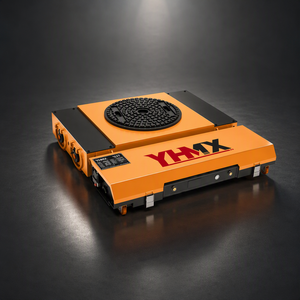
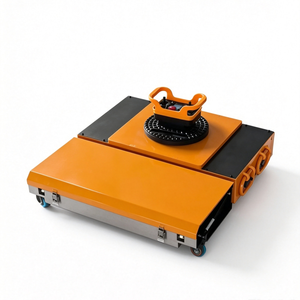
By coordinating factory floor crating, VCI anti-corrosion barrier protection, and specialized container stuffing (utilizing Open Top and Flat Rack equipment for heavy equipment like 40-ton motorized movers), we guarantee zero structural transit damage across transatlantic and transpacific shipping routes.
Intermodal Drayage & German Port Gateways
Germany’s logistics network relies on hyper-efficient seaport interfaces. Our direct integration with Hamburg (Altenwerder/Waltershof), Bremerhaven, and Eurogate hubs ensures rapid port drayage and devanning.
Our localized transloading strategies bypass port congestion by transitioning maritime containers directly into inland waterway barges along the Rhine-Herne Canal or onto DB Cargo rail networks, terminating directly at industrial centers in North Rhine-Westphalia and Baden-Württemberg.
Localized Applications Across German Industrial Hubs
Deployment scenarios for heavy machinery, automotive plants, and high-volume retail fulfillment centers.
Bavaria & Stuttgart Automotive Corridor
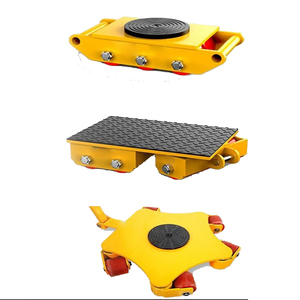
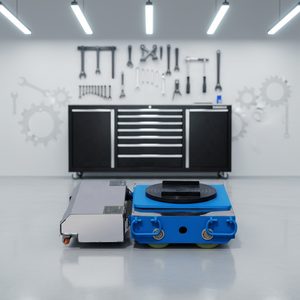
Supplying OEM production lines with automated heavy movers (40T shop-floor Movers and 20-50T Roller Tanks). Freight arrives via Hamburg, undergoes customs release, and moves via expedited feeder trucks directly to assembly floors in Munich, Stuttgart, and Dingolfing with zero line-stoppage risk.
Duisburg & Rhine-Ruhr Inland Logistics
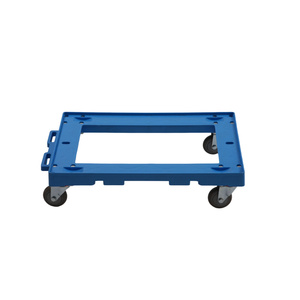
Duisport represents the largest inland port globally. We coordinate ocean-to-barge transloading solutions for eco-friendly crate dollies and mobile electric transporters, optimizing bulk freight movements serving Germany’s industrial heartland under cost-controlled barge freight tariffs.
Frankfurt / Hesse E-Commerce Distribution
Deploying modular high-density poly crate dollies and handling gear to mega-fulfillment facilities around Frankfurt Airport (FRA). We execute SKD container breakdown, palletization, and label compliance verification adhering to German GS1 barcode standards.
German Regulatory Compliance & Ocean Freight Macro-Trends
Mitigating supply chain friction by aligning with European green mandates and digital customs clearance protocols.
Supply Chain Act (Lieferkettensorgfaltspflichtengesetz - LkSG)
German buyers face strict statutory obligations to audit environmental and ethical compliance across every tier of their international supply chain. As an established OEM ocean freight partner, we provide complete transparent tracking, carbon-footprint reporting per TEU, and certified labor compliance across all foreign manufacturing and handling facilities.
ATLAS Automated Customs Integration
Delay at the German border translates to costly quay demurrage and storage penalties. Our logistics network utilizes direct interfaces with the ATLAS (Automatisiertes Tarif- und Lokales Zoll-Abwicklungs-System), securing pre-clearance certificates, T1 transit documents, and simplified customs procedures (Authorised Economic Operator - AEO certified paths).
EU Green Deal & Decarbonization Mandates
With FuelEU Maritime regulations tightening carbon intensity standards for vessels entering EU waters, our forwarding strategies prioritize green-corridor maritime carriers, slow-steaming routes, and bio-fuel offset options to align with your corporate ESG benchmarks.
CBAM (Carbon Border Adjustment Mechanism) Preparedness
For heavy industrial equipment, steel fabrications, and machinery exports, accurate embedded emissions data is required at customs entry. We systematically provide compliant CBAM data sheets alongside ocean bills of lading (B/L) to prevent import bottlenecks.
Comparative Freight Model: Standard vs. OEM Tailored Solution
| Execution Factor | Standard General Freight Forwarding | Our Custom OEM Ocean Freight to Germany |
|---|---|---|
| Cargo Protection | Standard poly wrapping, generic dunnage | Custom VCI anti-corrosion barrier, engineered wooden crating (ISPM 15 compliant) |
| Customs Clearance | Post-arrival manual filing (Risk of delays) | Pre-arrival ATLAS integration with automated EORI & T1 transit mapping |
| Port Drayage Execution | Subject to third-party driver availability | Dedicated priority drayage fleet with extended off-peak terminal gate access |
| Heavy Machinery Handling | Subcontracted riggers (Variable expertise) | In-house certified heavy-lift specialists using 20-50T roller tank equipment |
| EU Regulatory Auditing | Minimal documentation provided | Full LkSG supply chain visibility and CBAM emissions tracking documentation |
Why Enterprise Buyers & German Importers Partner With Us
Combining 25+ years of operational freight heritage with modern, certified logistics infrastructure.
160,000 Sq. Ft. Customs Bonded Facility
Our secure warehousing hub gives exporters and importers flexible bonded storage, allowing duty-deferred staging of heavy equipment, specialized vehicle components, and retail merchandise prior to European distribution.
CCSF & C-TPAT Security Certified
Holding Certified Cargo Screening Facility (CCSF) status and full C-TPAT supply chain security compliance, we ensure that air freight extensions or urgent multi-modal ocean transfers pass strict security screening effortlessly.
Specialized Devanning & Transloading
Our skilled terminal team executes delicate container devanning, sorting, palletizing, shrink-wrapping, and high-capacity machinery rigging within minutes of port availability, preventing costly demurrage accumulators.
Frequently Asked Questions: Purchasing & Ocean Logistics serving Germany
Expert answers addressing customs procedures, transit times, Incoterms, and heavy machinery shipping protocol.
Ocean freight transit times depend heavily on the port of origin. Direct ocean voyages from major East Coast U.S. ports to Hamburg or Bremerhaven typically take 11–14 days. Routes originating from major Asian transshipment ports (such as Shanghai, Ningbo, or Shenzhen) average 28–35 days via the Suez Canal route or around Good Hope depending on carrier loops.
Once landed at Hamburg or Bremerhaven, our local drayage network provides 24 to 48-hour door delivery across major German inland destinations via DB Cargo or feeder trucking.
Every commercial entity importing goods into Germany must possess a valid Economic Operators Registration and Identification (EORI) number. We integrate directly with the German customs electronic portal, ATLAS (Automatisiertes Tarif- und Lokales Zoll-Abwicklungs-System).
We process customs declarations, HS code classifications, duty calculations (Zollsatz), and Import Value Added Tax (Einfuhrumsatzsteuer - EUSt) prior to vessel discharge, allowing immediate release upon arrival.
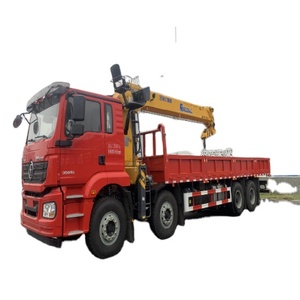
Maritime transport exposes cargo to salt spray, extreme humidity shifts, and multi-axis dynamic forces. For heavy equipment (like our 40-Ton Industrial Movers or Shacman Wrecker trucks), we utilize ISPM 15 certified heat-treated solid timber packaging, high-grade VCI (Vapor Corrosion Inhibitor) vacuum sealing, and heavy-duty steel wire lashing to container D-rings.
Oversized equipment is loaded on heavy-tested Flat Rack or Open Top containers with certified weight-distribution cradles.
Yes. We support all recognized Incoterms 2020. Under DDP terms, our freight forwarding network assumes complete responsibility for ocean transit, port handling charges, German customs clearance, duty payment, and final mile lift-gate delivery to the buyer’s warehouse floor. This provides German procurement officers with a risk-free, localized purchasing experience.
Low water levels on the Rhine can severely restrict inland barge draft capacities around Kaub and Duisburg. We maintain active contingency contracts with rail operators (DB Cargo) and dedicated road transport fleets.
When barge shallow-water surcharges kick in or navigation halts, your cargo is seamlessly diverted at port to intermodal rail or direct chassis trucks, ensuring continuous supply chain execution without unexpected warehouse shutdowns.
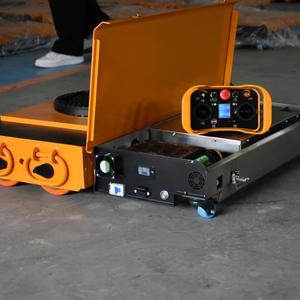
Absolutely. All OEM electrical and machinery components—including our Remote-Controlled Load Machines and Electric Tank Transporters—are built to conform with relevant EU Directives (Machinery Directive 2006/42/EC, EMC Directive 2014/30/EU). Full Declaration of Conformity documentation and CE marking are attached prior to export packaging.
Streamline Your Ocean Logistics & OEM Supply Chain Today
Connect with our senior ocean freight strategists and technical machinery experts to request a comprehensive route audit, custom packaging plan, or instant ocean freight quote to Germany.