Premier Export Marine Barges & Freight Services
Explore our top-tier engineered river/sea barges, deck carriers, landing crafts, and specialized door-to-door ocean freight solutions engineered for high-payload commercial deployment.
Executive Summary: The Macroeconomic Role of Chinese Barge Suppliers
Global supply chains are undergoing structural shifts, forcing maritime logistics coordinators, infrastructure developers, and procurement executives to recalibrate how heavy breakbulk, containerized freight, and raw commodities move across blue water and inland waterways. As coastal ports face intermittent congestion and overland highway haulage costs escalate under fuel market volatility, inland waterway transport (IWT) and coastal barge freight systems have re-emerged as the most cost-efficient, carbon-optimized, and reliable freight modes available today.
China has firmly established itself as the world’s preeminent naval manufacturing hub and marine logistics exporter. Utilizing advanced steel fabrication technologies, highly standardized naval architecture, and integrated marine supply chains, Chinese shipyards deliver custom self-propelled deck barges, Ro-Ro landing craft, hopper barges, and specialized split-hopper dredgers at unmatched capital efficiency. Simultaneously, Chinese freight forwarding and logistics integrators provide seamless end-to-end multimodal transport—bridging inland river systems via feeder barges to main ocean lanes connecting North America, Europe, Africa, and Southeast Asia.
Strategic Procurement Insight
Procuring marine barge transport equipment or hiring barge charter services from top China suppliers is no longer merely a transaction based on lowest-cost per deadweight ton (DWT). It requires a sophisticated evaluation of hull structural integrity, hydrostatic draft limits, propulsion engine emissions (IMO Tier III compliance), class certifications (CCS, BV, ABS, DNV), and total cost of ownership (TCO) over a 25-to-30-year operational lifecycle.
Taxonomy & Engineering Specifications of Export Marine Barges
To optimize capital expenditure (CAPEX) or operational logistics budgets, procurement officers must understand the mechanical and structural differentiators across the primary categories of export barges manufactured and operated by Chinese maritime suppliers.
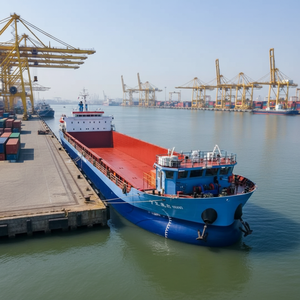
Self-Propelled Deck Barges & LCTs
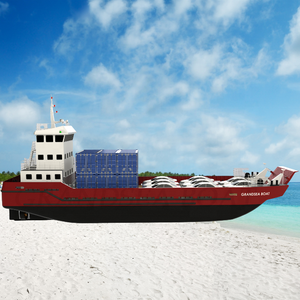
Engineered with integrated marine diesel engines (e.g., Cummins, Weichai, Caterpillar) and hydraulic steering systems. Featuring heavy deck loading tolerances ranging from 5 to 15 metric tons per square meter, these vessels excel in shallow-draft coastal transit, island inter-linkage, and project cargo movement without requiring tug assistance.
Ro-Ro (Roll-on/Roll-off) Container Barges
Equipped with hydraulic bow ramps and reinforced deck beams, Ro-Ro barges permit direct vehicular access for heavy machinery, trucks, and wheeled container chassis. Ideal for remote logistics where port crane infrastructure is minimal or non-existent.
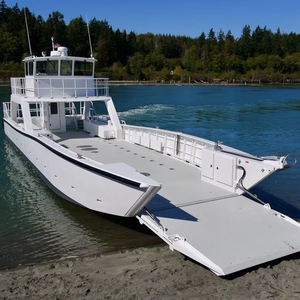
Aluminum Work Barges & Landing Crafts
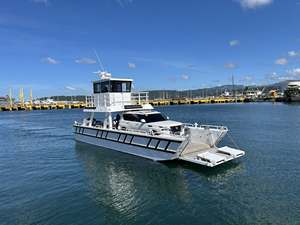
Constructed from marine-grade 5083-H116 aluminum alloy. Designed for shallow drafts, high maneuvering speeds, and exceptional corrosion resistance in tropical saltwater environments. Commonly deployed for passenger transfer, coastal surveying, and light equipment cargo logistics.
Technical Engineering Blueprint Comparison
When selecting a Chinese barge exporter, evaluating technical parameters against mission critical metrics is mandatory. Below is an engineering benchmark grid typical of top-tier Chinese barge builders:
Future Procurement Trends in Barge Equipment & Marine Logistics (2025–2035)
As the international maritime domain rapidly moves toward carbon-neutral mandates established by the International Maritime Organization (IMO), procurement executives must look beyond traditional diesel-powered vessels. Sourcing decisions made today will impact fleet operational costs through 2050.
1. Decarbonization & Green Hybrid Propulsion Integration
Leading Chinese barge shipyards are pioneering the deployment of alternative energy systems on inland and short-sea cargo barges. Sourcing trends indicate a massive shift toward:
- Pure-Electric Battery Power Systems: Utilizing lithium iron phosphate (LFP) marine battery banks for urban river routes, significantly dropping localized emissions to zero and cutting energy expenditure by up to 45%.
- LNG Dual-Fuel & Methanol-Ready Engines: Mid-to-large deck barges designed with modular deck space reserved for cryo-tanks, anticipating green methanol bunkering networks along global trade routes.
- Solar-Augmented Auxiliary Grids: Integration of anti-glare photovoltaic deck panel arrays to power auxiliary pumps, crew quarters, and monitoring electronics without generator drain.
2. Autonomous Navigation & Digital Twin Fleet Management
Smart barge logistics is no longer theoretical. China's leading exporters are equipping modern vessels with 5G-enabled telemetry, LiDAR hazard mapping, and AI-assisted collision avoidance software. Buyers can now request digital twin models of their customized barges during shipbuilding, enabling real-time structural stress analysis, predictive maintenance scheduling, and remote engine diagnostics throughout the vessel's operational lifecycle.
3. Modular and Standardized Multi-Mission Hull Designs
Flexibility is paramount in dynamic shipping markets. Modern procurement tenders increasingly specify modular deck setups—allowing a single self-propelled deck barge to swap between flat-deck breakbulk haulage, container twist-lock layouts, and removable liquid tank skids within a 24-hour port turnaround.
Industry Development Trends: Multimodal Sea-Barge-Rail Integration
The global freight forwarder landscape is experiencing deep vertical integration. The traditional separation between vessel manufacturing, port drayage, and ocean shipping has dissolved. Modern supply chain managers demand an end-to-end framework where river barges seamlessly feed deep-sea container ships and intermodal rail links.
Mitigating Port Congestion via Feeder Barge Networks
Major ocean gateways—such as the Ports of Los Angeles, Long Beach, Shanghai, and Rotterdam—frequently face landside drayage bottlenecks and container yard congestion. Utilizing localized feeder barge networks to transport containers directly from deep-sea terminals to regional inland bonded warehouses reduces reliance on long-haul trucking, lowers fuel surcharges, and eliminates costly demurrage and detention fees.
Door-to-Door (DDP/DDU) Logistics Ecosystems
A critical advantage provided by premier China logistics partners is the consolidation of manufacturing export and freight forwarding. Buyers no longer need to manage multiple contracts across shipyards, ocean carriers, customs brokers, and last-mile drayage operators. Integrated DDP (Delivered Duty Paid) frameworks ensure full compliance, customs clearance, and direct site delivery under a single bill of lading (BOL).
Enterprise Advantages: Why Partner With Our Global Logistics Network
Navigating international vessel procurement and complex marine freight requires an operational team backed by deep domain expertise, global compliance certifications, and robust infrastructure.
25+ Years Experiential Expertise
Our operational history covers complex maritime transport, breakbulk ocean chartering, project cargo management, and custom ship exports. We have solved complex logistics hurdles across North America, Europe, Asia, and emerging markets.
160,000 Sq. Ft. Bonded Warehousing
We maintain expansive, strategically located warehouse facilities near key port corridors. Featuring U.S. Customs Bonded status, CTPAT compliance, and CCSF (Certified Cargo Screening Facility) capabilities for maximum cargo security.
End-to-End Transloading & Drayage
From port devanning, palletization, and sorting to hazardous materials (Hazmat/DG) handling and heavy-haul truckload dispatching, our fully integrated solution guarantees your freight stays on schedule.
Whether you are procuring a specialized aluminum work barge from a Chinese shipyard or arranging international ocean freight with integrated barge transloading, our team ensures full transparency, rigorous quality assurance, and streamlined regulatory execution.
Frequently Asked Questions (FAQ) for Sourcing Barges & Freight Services
Below are authoritative technical and logistical responses to common queries encountered by global buyers when sourcing barge equipment and international freight services from China.
Barges are exported using three main logistical methods depending on vessel dimensions and propulsion: 1) Deck-Carrying Heavy Lift Ships: Larger non-self-propelled deck barges or multiple units are stacked and secured on dry-deck heavy lift vessels. 2) Semi-Submersible Heavy Transport Vessels: Ideal for ultra-large barges or multiple floating craft loaded via float-on/float-off (Flo-Flo) operations. 3) Own-Power Sea Towage / Voyage: Self-propelled landing craft (LCTs) or self-propelled deck carriers with proper open-sea class certificates can undergo direct ocean transit under their own power or via standard tug towage.
Reputable Chinese barge suppliers build vessels compliant with International Association of Classification Societies (IACS) members. Buyers can specify certification from CCS (China Classification Society), BV (Bureau Veritas), ABS (American Bureau of Shipping), DNV (Det Norske Veritas), or LR (Lloyd's Register). Class notation verifies structural design safety, plate thickness, stability calculations, and machinery compliance.
Under DDU (Delivered Duty Unpaid), the exporter handles transport to the named destination port or inland location, but the buyer remains responsible for paying import customs duties, taxes, and local clearing fees. Under DDP (Delivered Duty Paid), the seller/logistics provider assumes end-to-end responsibility, paying all tariffs, import VAT, customs fees, and delivering the cargo directly to the buyer's site with zero unexpected cost markups.
Hydrostatic draft is a critical design factor. Shallow river systems, tropical deltas, or seasonal low-water routes require wide-beam, shallow-draft flat barges (drafts often under 1.0m to 1.5m). Over-designing vessel depth can lead to grounding incidents or payload reductions during low-water seasons. Our naval architecture partners analyze localized river gauge data before confirming hull dimensions.
Yes, provided the deck structure is engineered with reinforced transverse framing and longitudinal stiffeners under the point-load zones. While aluminum alloys (5083-H116) weigh approximately 33% of equivalent structural steel—yielding significant fuel savings and higher speeds—deck plate thickness and internal girder framing must be engineered specifically for the target axle loading (e.g., 6-ton to 16-ton excavator limits).
Importing commercial vessels requires: Commercial Invoice, Packing List, Bill of Lading (BOL), Builder’s Certificate, Certificate of Origin, International Tonnage Certificate, Stability Booklet, and Class Inspection Certificates. Partnering with an experienced freight provider ensures all import filings, environmental compliance checks, and customs bonds are accurately executed.
Hazardous cargo demands strict adherence to the International Maritime Dangerous Goods (IMDG) Code. Transloading facilities must hold specialized bonded permits, employ certified Hazmat handlers, maintain segregated explosion-proof storage areas, and verify proper placarding, UN packaging, and Dangerous Goods Declarations prior to loading onto coastal barges or ocean vessels.