Industry Insights & News

Freight & Logistics Insights

Expert analysis, shipping updates, and practical supply chain solutions from 25+ years of operational experience.

0%

Choosing the right Step Deck Trailer Transport option can shape an entire international shipping project. A step deck trailer offers lower deck clearance, flexible loading space, and practical access for tall machinery, industrial equipment, and oversized components. Yet equipment dimensions alone do not determine the best solution. Route limits, axle weights, bridge clearances, customs procedures, insurance terms, and delivery schedules also matter.

This guide introduces ten transport options for global buyers, based on real planning considerations used by experienced logistics teams. Each option reflects a different balance of cost, capacity, speed, loading method, and destination access. Some carriers provide GPS tracking and digital documentation. Others may offer stronger regional expertise or better support for remote delivery points. Reliable providers should explain permits, inspection requirements, securing methods, and contingency plans before collection. Clear communication matters when a shipment crosses several borders.

No option is perfect.

A quoted price may change after route reviews, fuel adjustments, or equipment inspections. Buyers should request written specifications, verified insurance coverage, and recent delivery references. Photos of loading ramps, chains, tarps, and deck conditions can reveal practical details that brochures often miss. We also recognize that projected transit times are estimates, not promises. Weather, port congestion, and border delays can disrupt even carefully managed shipments. The following overview helps buyers compare Step Deck Trailer Transport solutions with greater confidence, while leaving room for professional advice and careful reassessment.
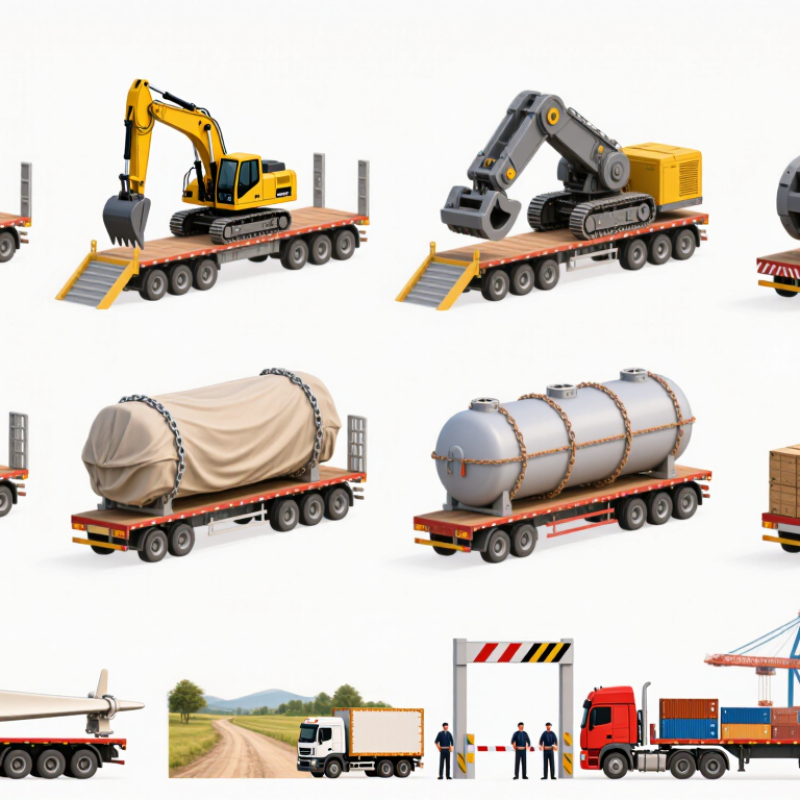
Top 10 Step Deck Trailer Transport Options for Global Buyers

Step Deck Trailer Basics and Their Role in Global Freight Transport

Step deck trailers use a lowered main deck and a higher front platform. This design creates extra vertical clearance for tall machinery, steel frames, and industrial components. Typical deck heights vary by equipment, suspension, and jurisdiction. Buyers should confirm usable length, width, axle capacity, and loading height before requesting a quote.

In practical freight planning, a standard step deck suits regular oversized cargo. An extendable version supports longer structures. Multi-axle configurations distribute heavier loads across approved limits. A removable gooseneck can simplify loading for wheeled equipment. These options matter in global shipments because inland roads, ports, and border terminals rarely offer identical conditions. The World Bank’s Logistics Performance Index 2023 covered 139 economies and emphasized shipment reliability, not price alone. That point is easy to underestimate.

UNCTAD’s Review of Maritime Transport 2024 reports that over 80% of world merchandise trade by volume moves by sea. Therefore, the trailer is often one link in a sea-to-road chain. Cargo should be secured for crane handling, rain exposure, vibration, and repeated transfers. A few centimeters can change the approved route. I have seen planning assumptions fail when the loaded height was measured without packaging. That was avoidable. Buyers should request recent dimensions, axle diagrams, loading photos, and route checks from qualified carriers. Specifications are useful, but field verification remains stronger. Sometimes, less capacity is safer.

Key Specifications for Comparing the Top 10 Step Deck Trailer Options

Top 10 Step Deck Trailer Transport Options for Global Buyers

Comparing step deck trailers requires more than checking length and price. Key specifications include deck height, payload, axle rating, tare weight, suspension, flooring, ramps, and tie-down points. A common configuration uses a 48- or 53-foot deck, an 8.5-foot width, and a lower deck near 10 feet. However, measurements vary by market and equipment design. Buyers should verify loading height with actual cargo drawings.

Payload deserves careful attention. The 2024 ATRI Operational Costs report recorded an average trucking cost of about $2.27 per mile in 2023. Excess trailer weight can increase fuel costs and reduce usable capacity. Compare the empty weight against axle limits, tire ratings, and expected cargo density. The 2023 World Bank Logistics Performance Index covered 139 economies and highlighted reliability as a major logistics factor. Strong suspension and corrosion protection may therefore matter more than a lower purchase price.

Tips: Request certified weight data, steel thickness, ramp capacity, and brake specifications. Check whether spare parts are available locally. Field inspections often reveal weak welds, uneven floors, or poorly protected wiring. A perfect trailer rarely exists. One overlooked detail can delay loading, especially when port roads, cranes, or regional height rules differ. Allow a small specification buffer, but avoid paying for unused capacity.

Top 10 Step Deck Trailer Transport Options for Global Buyers

Maximum payload comparison for common step deck trailer configurations. Payload figures are representative engineering benchmarks and can vary with axle ratings, tare weight, road regulations, and equipment specifications.

Typical comparison ranges: overall width is approximately 2.59 m, upper deck length is commonly 3.05–3.66 m, lower deck length is commonly 9.75–13.72 m, and lower deck height is generally about 0.76–0.91 m. Confirm legal dimensions, axle limits, ramp design, suspension type, and tare weight before international purchase or transport planning.

Cargo Types, Load Limits, and Regional Transport Requirements

Top 10 Step Deck Trailer Transport Options for Global Buyers

Step deck trailers suit tall, dense cargo that cannot fit beneath a standard deck. Common loads include excavators, agricultural machines, steel frames, prefabricated structures, and crated industrial equipment. The lower platform provides extra height clearance, but loading geometry still matters. Measure the cargo, including skids and lifting points.

In the United States, FHWA’s Compilation of Existing State Truck Size and Weight Limit Laws reports an 80,000-pound interstate gross limit, with 20,000 pounds on a single axle and 34,000 pounds on a tandem axle. State routes can differ. Permits may be required for heavier or wider machinery. A practical booking should verify axle spacing, center-of-gravity position, and tie-down capacity, not only total weight. Small oversights become expensive.

European international road freight generally follows Directive 96/53/EC, commonly allowing up to 40 tonnes for a standard combination and higher limits for specific combined-transport operations. Requirements differ by country, road class, and vehicle configuration. UNECE’s 2023 transport review also highlights border efficiency and infrastructure compatibility as major logistics factors. In Australia, mass limits depend strongly on axle groups and approved operating schemes. I have seen cargo plans fail because a “legal” weight was legal only in one region. Recheck bridge formulas, seasonal restrictions, escort rules, and unloading access before dispatch. The best option is rarely the cheapest trailer; it is the one matching the route, cargo height, and regional permit conditions.

Top 10 Step Deck Trailer Transport Options for Global Buyers - Cargo Types, Load Limits, and Regional Transport Requirements

Rank Transport Option Typical Trailer Configuration Best-Suited Cargo Types Typical Payload Planning Range Typical Usable Deck Length / Width Typical Regional Use Key Transport and Compliance Requirements
1 Standard Tandem-Axle Step Deck Two-axle trailer group; fixed upper deck and lower deck; usually equipped with ramps and tie-down points. Construction equipment, agricultural machinery, steel products, timber, industrial components, and crated machinery. Approximately 18–23 metric tonnes, subject to tractor weight, axle spacing, and local legal limits. About 12.2–13.7 m long and 2.5–2.55 m wide. United States, Canada, Mexico, and selected Central American corridors. Oversize permits may be required for width, height, or rear overhang. Cargo must be secured according to applicable cargo-securement rules, with axle weights checked before departure.
2 Tri-Axle Step Deck Three-axle trailer group designed to distribute heavier loads across more axles. Excavators, loaders, generators, transformers, concrete components, and dense steel assemblies. Approximately 23–30 metric tonnes, depending on axle spacing, trailer tare weight, and jurisdiction. About 12.2–13.7 m long and 2.5–2.55 m wide. North America, Australia, New Zealand, and selected heavy-haul routes. Axle-group limits and bridge-formula calculations are important. Permits, pilot vehicles, route surveys, or restricted travel hours may apply to heavy or oversized cargo.
3 Extendable Step Deck Telescoping deck that increases cargo length while retaining a lower deck height. Long structural steel, bridge beams, wind-energy components, pipe sections, conveyor frames, and prefabricated structures. Approximately 18–27 metric tonnes; the permissible payload can decrease as the deck is extended. Roughly 13.7–30.5 m long when extended; standard width is about 2.5–2.55 m. North America, Australia, and international project-cargo movements. Route engineering is needed for turning radius, bridge clearance, rear overhang, and load distribution. Long-load permits, escort vehicles, warning signs, and restricted travel windows may be required.
4 Double-Drop Low Step Deck Lower center deck between raised front and rear sections, creating additional vertical clearance. Mining machines, large generators, drilling equipment, industrial presses, and tall machinery. Approximately 18–25 metric tonnes for common configurations; heavier versions require route-specific engineering. About 9.1–12.2 m of lower-deck length, generally 2.5–2.55 m wide. United States, Canada, Mexico, Australia, and major industrial corridors. Useful for reducing total transport height, but loading height and ground-clearance limits must be checked. Permits are commonly required for width, weight, or height, with route clearance for bridges and overhead utilities.
5 Removable-Gooseneck Equipment Trailer Detachable front gooseneck with a low loading angle and a low deck height; often configured with ramps. Tracked excavators, bulldozers, cranes, drilling rigs, forestry equipment, and self-propelled machinery. Approximately 25–45 metric tonnes, depending on axle count and the applicable heavy-haul permit. About 9.1–12.2 m of usable well or lower-deck length; width commonly 2.5–3.0 m. North America and selected heavy-equipment transport markets. Loading method, machine operating weight, track or tire protection, and axle-group spacing must be verified. Heavy-haul permits, route surveys, escorts, and travel-time restrictions are frequently required.
6 European Low-Deck Platform Trailer Multi-axle platform or semi-low-loader design with a relatively low bed and modular axle arrangements. Industrial machinery, transformers, plant modules, steel fabrications, construction equipment, and project cargo. Approximately 20–40 metric tonnes for common configurations; higher capacities require specialized modular equipment. Usually about 13.6 m long and 2.55 m wide for standard European road equipment. European Union, the United Kingdom, Turkey, and cross-border European freight routes. European maximum dimensions and axle-load rules vary by country. Special transport authorization, escort requirements, route clearance, and notification to authorities may apply.
7 UK Step-Frame Specialist Trailer Low-loader or step-frame configuration adapted to UK road geometry, loading practices, and axle regulations. Plant machinery, generators, agricultural equipment, construction components, and compact industrial units. Approximately 18–30 metric tonnes, subject to axle configuration and the UK plated-weight limit. Commonly near 13.6 m long and up to about 2.55 m wide, with configuration-specific deck heights. United Kingdom and Ireland, with onward ferry or short-sea connections. Vehicle plating, axle weights, bridge restrictions, and abnormal-load notification requirements must be checked. Some routes require police notification, escort vehicles, or movement during approved time periods.
8 GCC Project-Cargo Step Deck Heavy-duty step deck or low-bed combination selected for long-distance highway and industrial-project movements. Oil-and-gas equipment, power-generation units, steel structures, construction machinery, and desalination-plant components. Approximately 20–40 metric tonnes for standard project moves; higher weights require engineered multi-axle combinations. Commonly 12–13.7 m long and approximately 2.5–3.0 m wide, depending on equipment and permit conditions. Gulf Cooperation Council markets and regional cross-border corridors. Import permits, customs documents, local transport approvals, route surveys, and escort requirements may vary by country. Extreme heat requires protection for sensitive cargo and careful tire and lashing inspections.
9 Australian Multi-Axle Step Deck Multi-axle step deck or low-loader combination configured for long distances and regional mass limits. Mining equipment, agricultural machinery, wind components, structural steel, and infrastructure modules. Approximately 25–45 metric tonnes for common combinations; higher mass requires state-specific approval and additional axle groups. About 12–19 m of usable deck length; width commonly up to approximately 2.5 m before oversize approval. Australia and selected New Zealand freight corridors. Mass and dimension rules differ by state or territory. Route approval, pilot vehicles, warning devices, curfews, bridge assessments, and road-train or restricted-route conditions may apply.
10 Modular Step Deck for Intermodal Project Cargo Configurable platform with removable extensions, modular axle lines, ramps, and lifting or transloading provisions. Oversized machinery, factory modules, rail equipment, energy infrastructure, steel assemblies, and port-to-project cargo. Approximately 30–100+ metric tonnes with engineered modular combinations; the final limit is route-specific. Deck length and width are configurable; common planning width is 2.5–3.2 m before special authorization. International port, inland-terminal, and large infrastructure-project routes. Requires an engineered transport plan covering loading, lifting, lashing, axle-line distribution, bridge capacity, turning paths, utilities, escorts, permits, customs, and transloading between road, rail, and sea.

Planning note: Payload ranges and dimensions are typical market-planning values rather than universal legal limits. Actual capacity depends on trailer tare weight, tractor configuration, axle spacing, cargo center of gravity, road classification, bridge limits, and the permits issued by the relevant transport authorities.

International Shipping, Compliance, and Buyer-Side Selection Factors

Global buyers can choose among ten practical step deck transport options: standard, extendable, low-profile, tandem-axle, tri-axle, multi-axle, detachable gooseneck, side-kit, enclosed, and port-ready configurations. Each serves a different cargo profile. Standard models suit machinery with moderate height. Extendable decks handle longer industrial units. Multi-axle designs distribute heavier loads across roads and bridges. Port-ready trailers can simplify terminal transfers, but only when their dimensions match local handling equipment.

International shipping requires more than selecting trailer capacity. Confirm cargo dimensions, axle weights, center of gravity, and loading points before requesting quotations. Check import duties, customs classifications, road permits, and destination safety rules with qualified local professionals. Tie-down plans should match the cargo’s weight and shape. Photographs of securing points can support inspections and claims. In my shipment planning experience, small measurement errors create expensive delays. I still recheck deck height after loading because suspension movement changes clearance.

Tips: Compare total landed cost, not only the trailer rate. Ask for route-specific permits, insurance limits, transit times, and demurrage terms. Verify whether the carrier provides loading supervision and condition reports. Keep commercial invoices, packing lists, weight certificates, and origin documents consistent. Wooden packaging may require approved treatment and marking. Some buyers overlook this detail. Also, request a written contingency plan for port congestion or border inspection. A perfect plan can still fail when local rules change, so leave realistic time for correction.

Cost, Supplier Evaluation, and Final Purchase Decision Criteria

For global buyers, the ten practical step deck options include 48-foot fixed, 53-foot fixed, spread-axle, sliding-axle, air-ride, tri-axle, tandem-axle, stretch, extendable, and low-profile configurations. Cost comparisons should include loading, port handling, permits, insurance, fuel adjustment, and inland delivery. The American Transportation Research Institute reported average U.S. trucking operating costs of about $2.26 per mile in 2023. This figure is useful, but international routes require additional customs and repositioning allowances.

Supplier evaluation needs evidence, not polished claims. Request axle-load charts, deck dimensions, payload records, maintenance logs, inspection certificates, and sample export documents. Check whether the quoted payload remains realistic after ramps, chains, tarps, spare tires, and hydraulic equipment are included. The International Transport Forum’s Transport Outlook emphasizes growing freight demand and supply-chain resilience, which makes equipment availability and replacement support important purchasing criteria. A cheap trailer with delayed parts can create expensive downtime.

I normally score suppliers across five areas: total landed cost, structural quality, compliance documentation, delivery reliability, and after-sales response. Ask for three comparable quotations using identical specifications. Then test the calculations against the actual cargo dimensions. A low quote can still be wrong. Buyers should also confirm corrosion protection for coastal routes, tire availability, warranty exclusions, and local service capacity. The World Bank’s Logistics Performance Index 2023 highlights major differences in international logistics reliability, so delivery promises deserve written milestones, not verbal assurance. Reflect before signing: the strongest purchase is not always the lowest initial price.

FAQS

What is a step deck trailer?

It has a lowered main deck and a higher front platform. This design gives tall cargo more vertical clearance. Measure the loaded height carefully.

Which cargo commonly uses this trailer type?

Common loads include excavators, farm machinery, steel frames, prefabricated structures, and crated industrial equipment. Skids and lifting points also affect dimensions.

When is an extendable step deck useful?

An extendable version suits long structures that exceed normal deck length. Confirm extension limits, support points, and route turning space before booking. Longer is not always better.

How should buyers choose axle capacity?

Match axle groups to cargo weight, spacing, and regional limits. Check the center of gravity and tie-down capacity, not just total weight. Weight distribution matters.

What dimensions should be confirmed before requesting a quote?

Confirm usable length, width, loaded height, gross weight, axle spacing, and loading points. Include packaging, skids, and lifting attachments. Measure everything.

Are step deck rules the same worldwide?

No. Weight, axle, width, escort, and permit rules vary by country and route. A load can be legal in one region but restricted elsewhere. Routes disagree.

How does a trailer fit into ocean freight?

It often connects inland roads, ports, and border terminals. Cargo may face cranes, rain, vibration, and repeated transfers. Secure it for each movement.

What documents and checks should buyers request?

Request recent dimensions, axle diagrams, loading photos, and route verification from qualified carriers. Confirm bridge limits, seasonal restrictions, permits, and unloading access. Specifications can be wrong.

Is the cheapest trailer usually the best choice?

Not always. The safer choice matches cargo height, weight distribution, route conditions, and local permits. I would recheck every assumption before dispatch.

Conclusion

Step Deck Trailer Transport plays an important role in global freight by providing a lower deck height and greater loading flexibility than standard trailers. This design is well suited for tall, wide, heavy, and oversized cargo that must meet road clearance and weight requirements. When comparing the top ten options, buyers should evaluate deck dimensions, axle configuration, payload capacity, suspension systems, loading accessibility, durability, and compatibility with regional transport regulations.

Successful international purchasing also requires careful attention to cargo type, route conditions, customs documentation, safety standards, and cross-border compliance. Buyers should compare total ownership costs, including purchase price, shipping, insurance, maintenance, taxes, and potential equipment modifications. A reliable supplier should offer accurate specifications, quality documentation, responsive communication, and dependable after-sales support. By balancing technical performance, regulatory suitability, delivery requirements, and long-term value, global buyers can select a step deck trailer that supports safe, efficient, and cost-effective freight operations.

Amelia

Amelia

Amelia is a dedicated marketing professional with a deep understanding of the company’s products, customers, and evolving market needs. With a strong background in content strategy, product communication, and digital marketing, she transforms complex information into clear, practical, and engaging......