Industry Insights & News

Freight & Logistics Insights

Expert analysis, shipping updates, and practical supply chain solutions from 25+ years of operational experience.

0%

Intermodal Freight Transport connects two or more transport modes within one coordinated journey. A sealed container may leave a factory by truck, travel across a rail network, and reach a distribution center by another truck. The cargo stays inside the same loading unit during transfers. That detail matters.

Transport geographer Dr. Jean-Paul Rodrigue explains, “Intermodal transportation is the movement of goods in one and the same loading unit or vehicle by successively using several modes of transport without handling of the goods themselves when changing modes.” His definition, published in The Geography of Transport Systems, clarifies the system’s central principle: transfer the equipment, not the cargo.

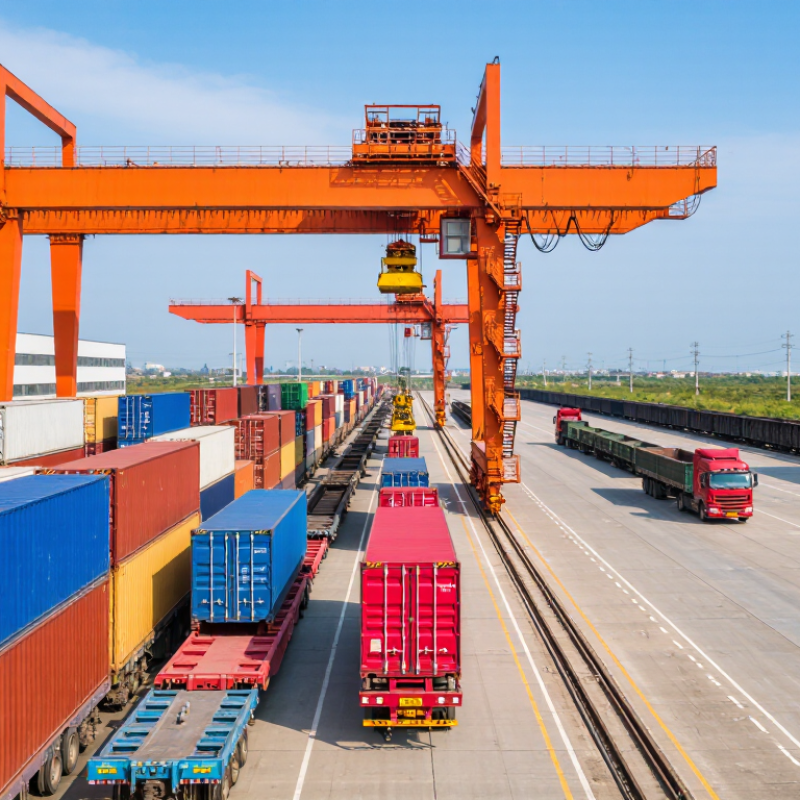
In practice, a shipper plans the route, reserves capacity, prepares documentation, and tracks each handoff. At a terminal, cranes move containers between trucks, trains, and vessels. Digital tracking can show a container’s location, while scheduled connections help reduce waiting time. Rail often handles long inland distances. Trucks usually manage collection and final delivery.

No single mode wins every route.

Intermodal Freight Transport can lower road congestion, improve fuel efficiency, and support more predictable long-distance movement. However, these benefits depend on reliable terminals, compatible equipment, accurate scheduling, and balanced freight volumes. A missed rail connection can delay an entire delivery window. That risk is easy to underestimate.

The model is efficient, but not magical. Weather, infrastructure limits, and poor coordination can weaken its advantages. This guide examines how the process works, where it performs best, and why careful planning remains essential.
What Is Intermodal Freight Transport and How Does It Work?

Defining Intermodal Freight: One Shipment Using Road, Rail, Sea, or Air

Intermodal freight transport moves one shipment through two or more transport modes. Road, rail, sea, and air can work together. The cargo usually stays inside the same sealed container during transfers. Workers move the container, not each carton. A truck may collect a 40-foot container from a factory. Rail can carry it inland, while a vessel handles the ocean leg. Another truck completes the final delivery. Air freight may replace sea transport when speed matters more than cost.

The process depends on schedules, terminals, documents, and equipment that fit together. A transport provider may coordinate the journey under one shipping plan, although contracts and liability rules can differ. The United Nations Conference on Trade and Development reported in its Review of Maritime Transport 2024 that over 80% of global trade volume moves by sea. That figure explains why sea-rail and sea-road combinations remain important. The International Transport Forum’s Transport Outlook 2023 also projects strong growth in freight demand by 2050, increasing pressure on transport networks.

In practice, intermodal planning is rarely perfect. A missed rail connection can leave a container waiting beside a terminal crane. Weather can delay vessels. Bad weight data can disrupt loading plans. Better tracking, accurate cargo measurements, and realistic buffer time reduce these problems. The World Bank’s Logistics Performance Index 2023 highlights customs, infrastructure, tracking, and timeliness as key logistics capabilities. Intermodal freight works best when each handoff is planned as carefully as the main journey.

Intermodal Freight Transport: Typical CO₂e Emissions by Mode

Intermodal freight uses two or more transport modes for one shipment. Road, rail, sea, and air can be combined to balance access, speed, capacity, and environmental impact.

Indicative benchmark values shown in grams of CO₂e per tonne-kilometre: air freight is generally the most emissions-intensive, while ocean shipping and rail typically produce lower emissions per unit of freight moved. Actual results vary by distance, vehicle type, fuel, load factor, route, and operating conditions.

Standardized Equipment: How ISO 20- and 40-Foot Containers Enable Transfers

Intermodal freight works because cargo stays inside one standardized box while transport modes change. A 20-foot container measures about 6.06 meters externally. A 40-foot unit measures about 12.19 meters. Both are generally 2.44 meters wide, with reinforced corner castings for lifting and securing. ISO 668 defines these basic dimensions, helping cranes, chassis, rail wagons, and vessel cell guides handle the same equipment. One 20-foot container equals one TEU. A 40-foot container equals two TEUs.

The system depends on precise handoffs. A crane lifts the box from a ship, then twist locks secure it to a chassis or rail platform. Workers verify the container number, gross mass, seal condition, and structural damage. UNCTAD’s Review of Maritime Transport 2024 reports that global container port throughput reached approximately 860 million TEUs in 2023. Its Handbook of Statistics 2024 also confirms that maritime transport carries over 80% of world merchandise trade by volume. Standardization is essential at that scale. Still, a perfect transfer is not guaranteed. A damaged corner casting or incorrect weight can interrupt an otherwise efficient move.

Tips: Match the container type to the cargo, not only its length. Leave clearance around doors and corner fittings. Check twist locks before every transfer. Record visible damage with time-stamped photos. ISO dimensions are consistent, but internal capacity, payload limits, and local equipment can vary.

What Is Intermodal Freight Transport and How Does It Work? — Standardized Equipment: How ISO 20- and 40-Foot Containers Enable Transfers
Data Dimension ISO 20-Foot Container ISO 40-Foot Container How It Supports Intermodal Transfers
Common ISO designation 1 TEU; commonly identified as a standard dry freight container. 2 TEU; commonly identified as a standard dry freight container. TEU-based measurements provide a common planning unit for ships, rail terminals, yards, and inland transport equipment.
Nominal external length 20 feet; approximately 6.058 metres. 40 feet; approximately 12.192 metres. Standardized external lengths allow compatible container slots, chassis, rail wagons, lifting equipment, and vessel cell guides to be designed around common dimensions.
External width Approximately 2.438 metres, or 8 feet. Approximately 2.438 metres, or 8 feet. The shared width supports consistent clearance planning on roads, rail networks, terminal lanes, and vessel decks.
External height Approximately 2.591 metres for a standard-height unit. Approximately 2.591 metres for a standard-height unit. Common height enables standardized stacking and handling; special high-cube units are taller and require additional clearance checks.
Typical internal length Approximately 5.90 metres. Approximately 12.03 metres. The internal length determines loading plans, pallet positions, cargo separation, and the amount of usable floor space.
Typical internal width Approximately 2.35 metres. Approximately 2.35 metres. The internal width is narrower than the external width because of the container walls and structural frame.
Typical internal height Approximately 2.39 metres for a standard-height unit. Approximately 2.39 metres for a standard-height unit. Available height affects the loading of cartons, machinery, pallets, and other packaged cargo.
Approximate internal volume About 33 cubic metres. About 67 cubic metres. Volume planning helps shippers select equipment and estimate how much cargo can move without unpacking between transport modes.
Typical maximum gross mass Often rated up to approximately 30,480 kilograms, including cargo, tare mass, and packing materials. Often rated up to approximately 30,480 kilograms, including cargo, tare mass, and packing materials. Actual permitted mass depends on the container rating, road and rail regulations, axle limits, route restrictions, and carrier requirements.
Payload capacity Usually lower than the maximum gross mass by the container's tare mass; the exact payload varies by construction and equipment type. Usually lower than the maximum gross mass by the container's tare mass; the exact payload varies by construction and equipment type. Weight, rather than volume, can become the limiting factor for dense cargo, particularly in inland transport operations.
Structural connection points Eight standardized corner castings: four at the top and four at the bottom. Eight standardized corner castings: four at the top and four at the bottom. Twist-lock devices and lifting spreaders engage these corner castings to secure, lift, stack, and transfer the container without handling the cargo inside.
Road movement Mounted on a compatible container chassis and moved by a tractor unit. Mounted on a compatible container chassis and moved by a tractor unit. The container remains sealed while the chassis carries it between a terminal, warehouse, distribution centre, or customer location.
Rail movement Placed on a rail wagon designed for standardized containers. Placed on a rail wagon designed for standardized containers. Rail can transport the same loading unit over long inland distances without repacking the goods.
Marine movement Secured in a vessel cell, on deck, or on suitable cargo-handling equipment. Secured in a vessel cell, on deck, or on suitable cargo-handling equipment. Standard dimensions allow containers to be stacked and secured in predetermined vessel positions using approved lashing and locking systems.
Typical transfer sequence Warehouse loading → road chassis → rail or marine terminal → rail or vessel → final road delivery. Warehouse loading → road chassis → rail or marine terminal → rail or vessel → final road delivery. At each interchange, cranes, reach stackers, or gantry equipment move the complete container rather than transferring individual packages.
Cargo protection The rigid enclosure protects cargo from weather and reduces repeated handling, subject to correct packing, lashing, sealing, and inspection. Using one sealed loading unit can reduce exposure to damage, loss, and contamination during changes between road, rail, and water transport.
Key operating limitation Dimensions and mass limits are standardized, but internal dimensions, tare mass, allowable payload, and local transport rules can vary. Operators must verify equipment specifications, cargo weight distribution, axle limits, clearance restrictions, and terminal handling requirements before dispatch.
Main intermodal benefit The same standardized loading unit can move across multiple transport modes with minimal cargo disturbance. This reduces the need for repacking at mode changes and supports efficient coordination between shippers, carriers, terminals, rail operators, and ports.

The Step-by-Step Journey: Booking, Drayage, Terminal Handling, and Delivery

What Is Intermodal Freight Transport and How Does It Work?

Intermodal freight transport moves one shipment through several transport modes, usually without unloading the cargo itself. A typical journey begins when a shipper books space with a carrier or freight forwarder. The booking should confirm cargo dimensions, weight, pickup time, equipment, and delivery deadline. This detail matters. A wrong measurement can create delays, extra charges, or rejected equipment. UNCTAD’s Review of Maritime Transport 2023 notes that ships carry over 80% of global trade by volume, making smooth connections between ports, rail, and trucks essential.

Drayage usually covers the short truck movement between a warehouse, port, rail ramp, or inland terminal. At the terminal, workers verify documents, inspect the container, and transfer it between vessels, cranes, railcars, or chassis. Tracking events may show “gate-in,” “loaded,” or “departed,” but these updates are not always perfectly synchronized. The World Bank’s 2023 Logistics Performance Index emphasizes that reliability and shipment visibility strongly affect supply-chain performance. After the long-haul rail or ocean leg, another drayage truck collects the container. It then delivers the freight to a distribution center, where unloading and equipment return complete the movement.

Tips: Confirm the cut-off time, free-time rules, seal number, and delivery appointment before pickup. Build a small buffer. Terminal congestion can change the plan, even when every document appears correct. A practical review of each handoff often reveals the weakest link. (Sources: UNCTAD Review of Maritime Transport 2023; World Bank Logistics Performance Index 2023)

Network Performance: AAR Reports Rail Moves One Ton 470 Miles per Gallon

Intermodal freight transport moves one shipment through multiple modes without unloading its cargo. A container may travel by truck, rail, and truck again. Terminals transfer the sealed unit between chassis and rail equipment. This reduces repeated handling, although every transfer adds scheduling pressure.

Fuel efficiency explains intermodal rail’s network value. The Association of American Railroads reports that rail moves one ton of freight an average of 470 miles on one gallon of fuel. That distance equals roughly 756 kilometers. For a loaded container crossing a continent, the arithmetic becomes meaningful. Fewer refueling stops can also support steadier operating plans.

The statistic needs careful interpretation. It represents an industry average, not a guarantee for every shipment. Route length, train weight, terminal delays, weather, and empty repositioning can change results. The U.S. Environmental Protection Agency has reported that freight rail can move cargo up to four times more efficiently than trucks. Still, rail cannot reach every loading dock. A short truck drayage leg usually remains necessary.

In practice, planners compare fuel use, transfer time, service frequency, and terminal distance. A rail segment may save fuel but lose time if connections are poorly timed. That trade-off deserves attention. The strongest intermodal plans use rail for long distances and trucks for flexible local delivery, while measuring actual performance instead of relying only on headline averages.

Costs and Sustainability: EPA Data on Rail’s Fuel and Emissions Advantages

What Is Intermodal Freight Transport and How Does It Work?

Intermodal freight transport moves cargo through two or more transport modes. A sealed container may travel by truck, rail, and truck again. The goods stay inside one container during transfers. Cranes lift the box between chassis and railcars, reducing repeated handling.

Costs and Sustainability: EPA Data on Rail’s Fuel and Emissions Advantages

Rail can lower long-distance transport costs because trains move many containers with fewer engines and drivers. According to U.S. Environmental Protection Agency data, freight rail can move one ton of cargo more than 470 miles on one gallon of fuel. Rail is also about three to four times more fuel-efficient than trucking in comparable freight movements.

That difference affects emissions. EPA comparisons indicate that rail freight can produce roughly 75% fewer greenhouse gas emissions than trucks. A single locomotive pulling dozens of containers may replace many individual tractor-trailers on a highway. The result can mean less fuel use, fewer exhaust sources, and reduced road congestion.

The savings are not automatic. Short routes, terminal charges, schedule limits, and extra transfers can weaken rail’s financial advantage. Weather and network delays may also matter. I have found that a carefully planned route often performs better than a simple truck-versus-rail comparison. The container still needs a truck at each end. That final distance counts. EPA figures provide a strong benchmark, but actual costs and emissions depend on distance, equipment, electricity sources, cargo weight, and empty return trips.

FAQS

What is intermodal freight transport?

It moves one sealed shipment through two or more transport modes. A truck, train, and another truck may handle the journey. The cargo stays inside the same container.

What are the common sizes of intermodal containers?

A 20-foot container is about 6.06 meters long. A 40-foot container is about 12.19 meters long. Both are generally 2.44 meters wide. A 20-foot unit equals one TEU. A 40-foot unit equals two TEUs.

How are containers transferred between ships, trucks, and trains?

Cranes lift containers by their reinforced corner fittings. Twist locks secure them to chassis or rail platforms. Workers check numbers, weights, seals, and visible damage. Small mistakes can stop a large movement.

Does standard container sizing guarantee smooth transfers?

No. Standard dimensions help equipment work together. They do not prevent damaged fittings, incorrect weights, or local equipment limits. Internal space and payload capacity can still vary. Not always predictable.

Why is rail useful for long-distance freight?

Rail can move heavy cargo efficiently over long routes. One reported average says one ton can travel about 470 miles on one gallon of fuel. That equals roughly 756 kilometers. Actual results may differ.

Is rail always cheaper than trucking?

No. Rail may reduce long-distance fuel and operating costs. Terminal fees, transfer times, and short routes can reduce the advantage. The container still needs trucks near both ends. That distance matters.

Can intermodal transport reduce emissions?

It can. Comparable freight movements may show rail using three to four times less fuel than trucks. Some estimates also show about 75% fewer greenhouse gas emissions. Results depend on distance, cargo weight, equipment, and empty returns. The estimate is not a promise.

What should planners check before choosing an intermodal route?

Compare fuel use, delivery time, service frequency, terminal distance, and handling costs. Choose rail for long distances when connections are reliable. Use trucks for flexible local delivery. Measure real performance afterward. I might still overlook a delay.

Conclusion

Intermodal Freight Transport is the movement of a single shipment through two or more modes, such as trucks, trains, ships, or aircraft, without unloading the cargo itself when switching between stages. Standardized 20- and 40-foot ISO containers make these transfers efficient by allowing cargo to move between different vehicles and terminals with minimal handling, improving security and reducing delays.

The process typically begins with booking and route planning, followed by drayage, in which a truck carries the container to or from a rail yard, port, or airport. Terminal operators then transfer the container between transport modes before the final delivery by truck or another suitable vehicle. Intermodal networks can balance speed, capacity, and cost, while rail offers notable efficiency advantages. In some reported comparisons, rail can move one ton of freight approximately 470 miles on a gallon of fuel. By combining long-distance rail or water transport with flexible local trucking, intermodal shipping can reduce fuel consumption, emissions, congestion, and overall transportation costs.

Ethan

Ethan

Ethan is a dedicated marketing professional with a strong understanding of the company’s products, services, and customer-focused solutions. With a background in market research, content strategy, and digital communication, he transforms complex product information into clear, practical, and......