Freight & Logistics Insights
Expert analysis, shipping updates, and practical supply chain solutions from 25+ years of operational experience.
How to Choose Reliable Hazmat Freight Logistics Services?
Table of Contents
- Understanding Hazmat Freight Classification and Regulatory Requirements
- Checking Carrier Licenses, Certifications, and Safety Records
- Evaluating Packaging, Labeling, Documentation, and Handling Procedures
- Comparing Tracking Systems, Emergency Response, and Security Measures
- Assessing Service Coverage, Pricing Transparency, and Customer Support
- FAQS
- Conclusion
- Related Posts
Choosing reliable Hazmat Freight Logistics services requires more than comparing freight rates. It demands documented controls, trained personnel, and visible accountability at every handoff. A sealed drum, accurate UN number, current Safety Data Sheet, and correctly marked pallet can prevent costly delays. Small details matter.
The U.S. Pipeline and Hazardous Materials Safety Administration’s incident data continues to show thousands of transportation-related hazardous materials incidents each year. Research and Markets also identifies steady growth in the global dangerous goods logistics sector, increasing pressure on carriers, warehouses, and compliance teams. These reports suggest a practical reality: capacity alone does not prove reliability. A provider should demonstrate audit records, emergency response procedures, driver training, approved packaging, and shipment-tracking performance.
Tristan Brown, former PHMSA Administrator, stated, “Safety is our number one priority.” That principle should guide every selection decision. Ask whether the provider can explain segregation rules, temperature controls, route planning, and escalation steps without vague promises. Check real performance, not polished brochures. Speak with recent customers.
Mistakes still happen.
A strong partner admits that risk cannot disappear. It can only be identified, reduced, monitored, and reviewed. The best Hazmat Freight Logistics provider combines regulatory knowledge with practical experience at loading docks, cross-border terminals, and distribution centers. This guide examines those signals closely, while recognizing one uncomfortable point: the cheapest option may become the most expensive after a delay, damaged package, or preventable compliance failure.
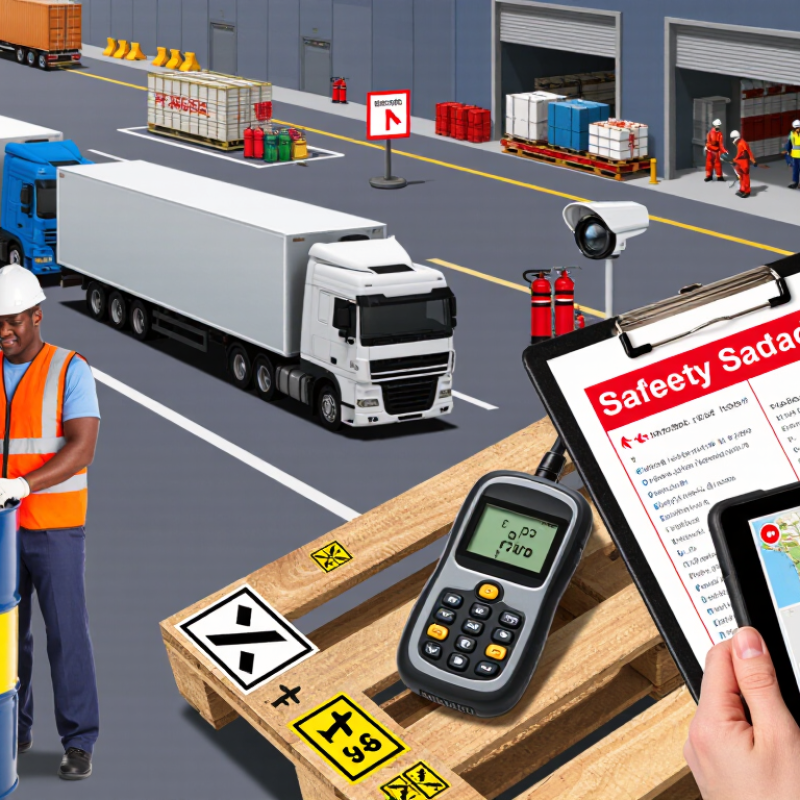
Understanding Hazmat Freight Classification and Regulatory Requirements
Reliable hazmat logistics begins with correct classification. The UN Model Regulations, 23rd revised edition (2023), divides dangerous goods into nine hazard classes. Each shipment needs an accurate UN number, proper shipping name, packing group, labels, and transport documents. These details control packaging, vehicle selection, handling, and emergency procedures. A small classification mistake can delay a truck at the border or trigger an unsafe handover.
Regulations differ by transport mode and location. Road shipments may follow national rules based on ADR, while air cargo requires stricter quantity and packaging controls under the 2024 IATA Dangerous Goods Regulations. The U.S. PHMSA 2023 Incident Statistics report also shows that hazmat events continue to require careful reporting and response planning. Ask providers for trained staff, current certificates, documented route checks, and shipment traceability. Do not accept vague answers. A spreadsheet can look complete and still hide a wrong packing group. I have seen this gap during routine document reviews.
Tips: Verify the safety data sheet before booking. Match every label to the declared classification. Check whether drivers and warehouse teams hold current training. Confirm temperature limits, segregation rules, and emergency contacts in writing. Review the carrier’s incident record, audit process, and subcontractor controls. Regulations change. Recheck them before each cross-border movement.
Checking Carrier Licenses, Certifications, and Safety Records
How to Choose Reliable Hazmat Freight Logistics Services?
Selecting a hazmat freight provider requires more than comparing delivery prices. The carrier’s license is the first practical checkpoint. Ask for current operating authority and verify it through the relevant transport regulator. Confirm that the authority covers your cargo type, shipping routes, and equipment needs. An expired document can create serious delays.
Certifications also deserve careful review. Check whether drivers receive documented training for handling, labeling, loading, and emergency response. Request recent vehicle inspection records, maintenance logs, and cargo securement procedures. Strong carriers can explain these processes without vague answers. Their safety documentation should be current, organized, and easy to verify. Insurance coverage should match the shipment’s risk and declared value.
Safety records reveal patterns that certificates may hide. Review inspection results, reported incidents, corrective actions, and recurring violations. A clean record is reassuring, but it does not prove perfect operations. Ask how the carrier investigates near misses and updates training afterward. That answer often shows more maturity than a polished brochure. It is also wise to contact recent customers about communication during delays or route changes. Documentation can be incomplete. Human judgment still matters. A provider may meet the minimum legal standard yet lack consistent daily discipline. Before booking, compare official records with the carrier’s actual answers, response speed, and willingness to share evidence.
How to Choose Reliable Hazmat Freight Logistics Services? - Checking Carrier Licenses, Certifications, and Safety Records
| Evaluation Dimension | What to Verify | Relevant Requirement or Standard | Reliable Evidence | Suggested Acceptance Check | Warning Signs |
|---|---|---|---|---|---|
| Operating Authority | Whether the carrier is authorized for the proposed interstate freight activity and commodity type. | Interstate motor carriers generally need active operating authority and a current USDOT registration where applicable. | Current regulatory profile, authority record, and carrier-provided operating credentials. | Authority status is active and matches the transportation service being purchased. | Authority is inactive, revoked, mismatched, or cannot be independently verified. |
| Hazardous Materials Registration | Whether the carrier or applicable offeror is registered for regulated hazardous materials activities. | PHMSA registration requirements apply to specified persons who offer or transport certain hazardous materials under 49 CFR Part 107, Subpart G. | Current PHMSA registration certificate or registration information, when the shipment falls within the registration rules. | Registration is current and covers the relevant operation, material, and registration period. | The carrier cannot explain whether registration is required or provides an expired document. |
| Driver Hazmat Qualification | Driver qualification, commercial driver license status, and hazardous materials endorsement where required. | Federal CDL rules require a hazardous materials endorsement for drivers operating vehicles that require hazardous-materials placarding, subject to applicable exceptions. | Redacted CDL verification, employer qualification file, and evidence of required security-threat assessment procedures. | The assigned driver has the correct license class, endorsement, and current qualification records. | The carrier relies only on general driving experience or cannot confirm the endorsement. |
| Employee Training | General awareness, function-specific, safety, and security-awareness training for hazmat employees. | 49 CFR Part 172, Subpart H requires hazardous-materials employee training, including recurrent training at least once every three years. | Training matrix, completion dates, course scope, examination records, and recurrent-training schedule. | Training is documented, role-specific, current, and completed before the employee performs regulated functions. | Training records are generic, incomplete, or older than the permitted recurrent-training interval. |
| Shipping Papers | Preparation, retention, and accessibility of shipping papers for the offered material. | 49 CFR Part 172, Subpart C specifies shipping-paper information and handling requirements for hazardous materials. | Redacted sample shipping paper, emergency-response telephone procedure, and document-retention policy. | Documents identify the material correctly and are available to the driver and emergency responders as required. | Missing proper shipping name, identification number, hazard class, packing group, or emergency information. |
| Packaging and Marking | Packaging selection, package condition, labels, marks, placards, and closure controls. | 49 CFR Parts 172 and 173 establish marking, labeling, placarding, and packaging requirements based on the material and quantity. | Packaging specification, inspection checklist, photos, closure procedure, and applicable package certification. | Packaging and hazard communication match the current classification, quantity, and transport mode. | Damaged packages, inconsistent labels, missing placards, or reliance on a generic packaging checklist. |
| Vehicle Inspection and Maintenance | Preventive maintenance, periodic inspection, defect correction, and pre-trip inspection controls. | Federal motor-carrier safety rules require systematic inspection, repair, and maintenance, including driver inspection duties. | Maintenance records, annual inspection documentation, defect reports, repair closeouts, and inspection procedures. | Records show recurring inspections and documented correction of safety-critical defects. | Repeated unresolved defects, missing inspection records, or unusually high equipment downtime. |
| Safety Performance | Crash history, inspection results, violations, and out-of-service history. | Public carrier safety information may include inspections, crashes, violations, and safety ratings; data should be interpreted in context and by operating segment. | Current official safety profile, recent inspection history, crash information, and written corrective-action records. | No unexplained pattern of serious hazmat, maintenance, driver, or controlled-substance violations. | Repeated serious violations, adverse safety rating, rising out-of-service rates, or incomplete explanations. |
| Insurance and Financial Responsibility | Coverage limits, policy status, cargo coverage, and exclusions related to hazardous materials. | Federal financial-responsibility requirements vary by vehicle type, commodity, quantity, and transportation activity; hazardous-materials operations may require higher limits. | Current certificate of insurance, policy effective dates, endorsements, and confirmation of hazmat-related coverage. | Coverage is active, meets the applicable legal minimum, and does not exclude the proposed material or route. | Expired certificate, unclear exclusions, insufficient limits, or refusal to provide policy confirmation. |
| Emergency Response | 24-hour incident reporting, spill response, escalation, and communication procedures. | Hazmat transportation rules require emergency-response information and prompt reporting for certain incidents. | Emergency response plan, contact roster, incident form, escalation timeline, and evidence of drills or exercises. | A live contact is available 24/7 and the procedure identifies notification, containment, and regulatory-reporting steps. | Only an office-hours contact is provided or the carrier cannot describe its first-hour response. |
| Route and Security Planning | Route selection, parking controls, prohibited-route review, shipment tracking, and security measures. | Hazardous-materials carriers must follow applicable routing, parking, attendance, and security requirements; additional planning may apply to high-consequence materials. | Route plan, parking-risk assessment, tracking procedure, access-control policy, and security plan where required. | The plan addresses the material’s risk, route restrictions, secure parking, custody changes, and communication loss. | Unplanned stops, unattended loads, public parking without controls, or no documented route review. |
| Subcontractor Control | Whether brokers, partner carriers, warehouses, and last-mile providers are qualified and monitored. | Contracting the transport does not remove the need to use properly authorized and qualified parties for regulated functions. | Approved-provider procedure, subcontractor credentials, audit records, training evidence, and written allocation of responsibilities. | Every party handling or transporting the shipment is identified, qualified, and covered by documented controls. | Unknown subcontractors, last-minute carrier substitutions, or no responsibility matrix. |
| Document Verification Date | The date on which licenses, certificates, insurance, training, and safety records were checked. | Regulatory status and safety information can change; verification should be completed before award and repeated periodically. | Signed due-diligence checklist with source links, screenshots or reports, reviewer name, and review date. | Records are recent, traceable to authoritative sources, and scheduled for renewal review. | Documents are undated, copied from an old tender, or cannot be traced to an official source. |
Regulatory requirements depend on jurisdiction, material classification, quantity, packaging, vehicle type, and transport mode. Confirm the final shipment requirements against the current rules applicable to the origin, destination, and transit countries.
Evaluating Packaging, Labeling, Documentation, and Handling Procedures
Choosing reliable hazmat freight logistics services requires more than comparing prices. Packaging, labeling, documentation, and handling reveal operational discipline. Ask how staff classify shipments and select packaging for each material’s physical properties. Containers should be compatible, secure, and tested for transport conditions.
A practical review may include photographs, inspection records, and sample packing procedures. Small details matter. Loose absorbent material, weak closures, or damaged outer boxes can create serious delays.
Labels must remain visible after rain, friction, and temperature changes. They should match shipment documents and clearly communicate required handling information. Documentation should be complete, readable, and prepared before pickup.
Check that emergency contacts, quantities, descriptions, and transport instructions remain consistent across every record. Experienced providers can explain their review process without vague promises. Ask who checks the paperwork, when corrections occur, and how revisions are logged. One weakness is enough. A polished form does not prove careful execution.
Tips: Request a packaging demonstration, not only a written policy. Confirm that handlers use inspection checklists and understand segregation requirements. Ask how incidents, damaged packages, and near misses are recorded. Review training dates and refresher practices. If answers sound rehearsed, ask for a specific example. I would also test communication after hours; many evaluations overlook this point. Recheck requirements with qualified regulatory professionals because rules and routes can change. A second review is worthwhile.
Comparing Tracking Systems, Emergency Response, and Security Measures
Reliable hazmat freight logistics depends on more than a delivery promise. A strong tracking system should show the shipment’s location, temperature, custody changes, and expected arrival time. Updates must come from verified scans, not occasional manual entries. Ask whether trained staff review unusual route delays or sensor alerts. A dashboard can look reassuring while important data remains incomplete.
Emergency response should be tested before an incident occurs. The provider needs a clear escalation chain, trained personnel, and documented procedures for delays, damaged packaging, or temperature changes. Response times should be measured during realistic drills. Security also requires practical controls, including sealed vehicles, driver identity checks, restricted access, and route-risk reviews. Small gaps matter. A single missed handover can weaken the entire chain.
Tips: Request sample tracking records and incident reports. Check whether emergency contacts answer after business hours. Confirm that employees receive recurring safety training. Review how access logs are stored and audited. Ask what happens when tracking data disappears. Honest providers should explain limitations instead of promising perfect visibility. I would also compare actual response times, because polished policies may not reflect field performance. Keep compliance documents current, and ensure every transport step follows applicable safety requirements.
How to Choose Reliable Hazmat Freight Logistics Services?
Suggested procurement benchmarks for comparing tracking systems, emergency response, and security measures.
A reliable hazmat logistics provider should offer near-continuous shipment visibility, rapid emergency acknowledgement, complete chain-of-custody records, and regularly tested security procedures. These are practical evaluation targets for procurement teams rather than legal thresholds.
Assessing Service Coverage, Pricing Transparency, and Customer Support
Reliable hazmat freight logistics begins with service coverage, not a low quotation. Check whether the provider supports your origin, destination, transport modes, and required hazard classifications. Ask for recent routing examples, carrier qualifications, emergency procedures, and documentation controls. The World Bank’s 2023 Logistics Performance Index emphasizes customs, tracking, infrastructure, and delivery timeliness as core logistics indicators. A provider with wide coverage but weak tracking may still create costly uncertainty.
Pricing transparency deserves equal attention. Request a line-item quote covering handling, packaging review, permits, storage, fuel adjustments, inspections, and possible reclassification charges. The 2024 State of Logistics Report estimated U.S. business logistics costs at about 10.7% of economic output in 2023, showing how quickly hidden expenses can accumulate. Compare transit assumptions, not only the final price. A cheaper quote may exclude port storage or after-hours response.
Customer support should feel practical. Test response times before signing: send a technical question and measure the answer. Can one trained contact explain a delayed pickup, damaged label, or route change clearly? Industry experience suggests that escalation quality matters most during disruptions. I have seen impressive coverage fail at this point. Good intentions are not enough. Ask for service-level targets, incident records, and communication frequency. The provider should offer written updates, visible shipment milestones, and a human escalation path when normal plans break.
FAQS
Check its current operating authority, cargo coverage, routes, and equipment permissions.
Request driver training records, vehicle inspections, maintenance logs, and cargo securement procedures.
Review inspections, incidents, corrective actions, and repeated violations.
It should display location, temperature, custody changes, and expected arrival time.
Ask for escalation contacts and written procedures for delays, damaged packaging, or temperature changes.
Look for sealed vehicles, driver identity checks, restricted access, and route-risk reviews.
Request an itemized quote covering handling, packaging review, permits, storage, fuel changes, and inspections.
Send a technical question before signing and measure the response time.
Conclusion
Choosing reliable Hazmat Freight Logistics services begins with understanding how materials are classified and which regulatory requirements apply to their transportation. A qualified provider should demonstrate valid carrier licenses, relevant certifications, trained personnel, and a strong safety record. It should also follow consistent procedures for approved packaging, accurate labeling, complete documentation, and careful loading and handling to reduce risk throughout the shipping process.
A dependable logistics partner should offer clear shipment tracking, practical emergency response plans, and effective security controls. It is also important to evaluate service coverage, delivery capabilities, pricing transparency, and customer support before making a decision. Providers that explain costs clearly, communicate promptly, and adapt their services to specific shipment needs can help customers manage schedules and responsibilities with greater confidence. By reviewing these factors together, businesses can select a safe, compliant, and efficient Hazmat Freight Logistics solution.

Blog Tags: